

Background
In the field of precision treatment for solid tumors, the selection of targets and the design of action mechanisms are the core of innovative drug research and development. EGFR (Epidermal Growth Factor Receptor 1) and HER3 (Human Epidermal Receptor 3), both members of the EGFR (ErbB) family, are structurally complementary and functionally synergistic. They are the core targets for the occurrence, development and drug resistance of solid tumors, serving as both classic targets with extensive clinical application and "pain point targets" that have plagued clinical practice for a long time. The dual-target design of HDM2024 precisely targets the synergy between the two, achieving a therapeutic breakthrough of "1+1>2".
Target Analysis
EGFR – The "Driver Target" of Solid Tumors
Core Structure: A transmembrane tyrosine kinase receptor mainly composed of three parts, with a focus on key functional regions:
· Extracellular Domain (ECD): Contains ligand-binding sites that can bind to ligands such as EGF and TGF-α, adopting a closed conformation when unbound to ligands;
· Transmembrane Domain (TMD): Mediates receptor dimerization and signal transduction;
· Intracellular Domain (ICD): Contains a complete tyrosine kinase domain (TK domain) that can catalyze autophosphorylation and initiate downstream signaling.
Expression Range: Widely expressed in various solid tumors including non-small cell lung cancer (NSCLC), breast cancer, gastric cancer, colorectal cancer and pancreatic cancer. Among them, the EGFR mutation rate in NSCLC is about 30%-50% in the Asian population, making it a key target for clinical treatment.
Core Function: Through a cascade reaction of "ligand binding → dimerization → signal activation", it initiates two core pathways, RAS/MAPK and PI3K/Akt, regulating the proliferation, differentiation, migration and survival of tumor cells. Its abnormal activation (mutation, amplification or overexpression) is the core inducement for the occurrence and development of various solid tumors.
Key Abnormalities: Common mutations in the intracellular TK domain (exon 19 deletion, exon 21 L858R) can lead to persistent receptor activation, driving tumor progression and serving as the action target of EGFR inhibitors.
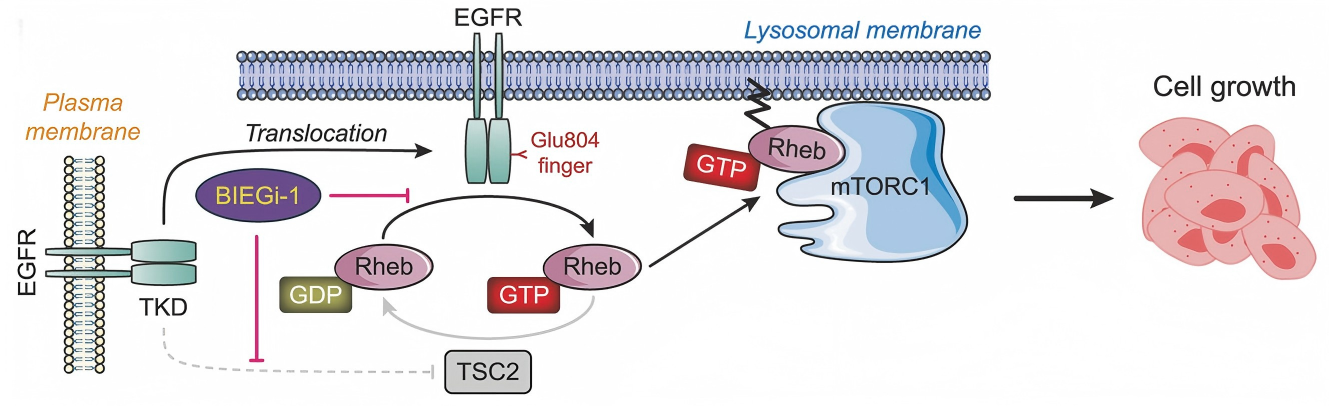 Figure 1 Schematic diagram of the structure and function of epidermal growth factor receptor (EGFR)[1]
HER3—The "Synergistic Target" of EGFR
Core Structure: Homologous to EGFR but with key differences, the core characteristics are:
· Extracellular Domain (ECD): Can bind to NRG ligands and easily form heterodimers with EGFR (highest affinity);
· Intracellular Domain (ICD): The TK domain has amino acid deletions with weak intrinsic kinase activity, unable to activate signals independently and relying on synergy with EGFR/HER2 for activation.
Core Function: The core is "synergistic activation", unable to drive tumors independently, with two key roles:
1. Synergistically amplifying signals: Forming heterodimers with EGFR, activating itself by virtue of the EGFR TK domain, enhancing the PI3K/Akt pathway and promoting tumor proliferation;
2. Mediating drug resistance: When EGFR is blocked by inhibitors, HER3 expression is upregulated and forms dimers with EGFR to compensate for signal activation, leading to drug resistance.
Clinical Value: Drugs targeting HER3 alone have limited efficacy, but synergistic blockade with the EGFR target can simultaneously cut off two core tumor proliferation signaling pathways, inhibit tumor growth from the source, reverse or delay drug resistance at the same time, and cover more tumor patients with EGFR sensitivity, drug resistance and high HER3 expression.
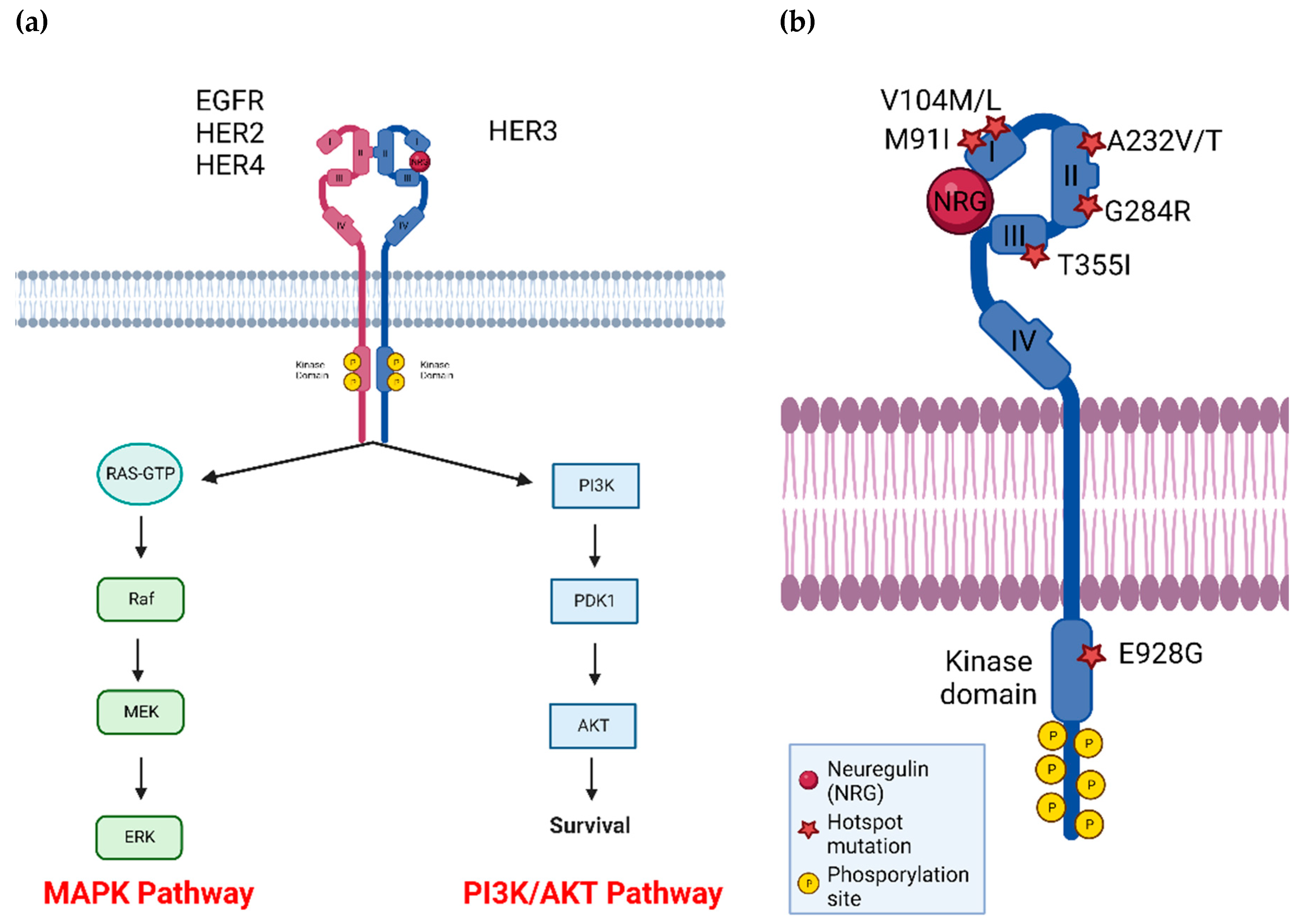 Figure 2 Structure and signaling pathway of HER3[2]
Core Breakthrough
HDM2024 – Dual-target Synergy + ADC Technology, Solving the Therapeutic Pain Points of Targets
Injectable HDM2024 is a novel bispecific antibody-drug conjugate (Bs-ADC) centered on the dual EGFR/HER3 targets. Combining the advantages of bispecific antibody and ADC technologies, it achieves precise and potent killing of solid tumors and specifically addresses the drug resistance dilemma of single-target therapy.
Dual-target Synergy Mechanism: The bispecific antibody molecule simultaneously binds to EGFR and HER3 on the surface of tumor cells with high affinity, blocking two core proliferation signaling pathways synchronously. It not only inhibits EGFR-driven tumor growth but also blocks the HER3-mediated drug resistance mechanism, achieving dual inhibition of tumor progression. The applicable population covers various solid tumor patients with EGFR sensitivity, drug resistance and high HER3 expression.
ADC Technology Enhancement: As a "targeted carrier", the bispecific antibody molecule accurately recognizes and binds to tumor cells and is actively internalized. The linker is cleaved to release a DNA topoisomerase 1 inhibitor-based cytotoxic payload, which directionally damages tumor cell DNA, achieving "precise delivery + potent killing" while minimizing damage to normal cells, with more advantageous safety.
Significance of This Progress
The EGFR/HER3 dual target has become a new research hotspot for solid tumors. At present, the treatment of solid tumors has entered the era of "precision targeting + combination therapy". Due to its wide population coverage and urgent demand for overcoming drug resistance, the EGFR/HER3 dual target has become a core track for innovative drug research and development. The combination of bispecific ADC technology and dual-target synergy mechanism breaks the limitations of single-target therapy, promotes the transformation of EGFR/HER3 dual-target therapy from "theory" to "clinical practice", and provides a new direction for the treatment of drug-resistant solid tumors.
Advantages and Applications of Nanobodies in Target Research and Development
Despite the considerable progress in the development of EGFR inhibitors over the past few decades, they still cannot escape limitations such as toxicity and short serum half-life. Nanobodies share similar binding properties with conventional antibodies but have an additional advantage: they can bind to antigenic epitopes deep in targets that are inaccessible to traditional antibodies. For targeted therapy, anti-EGFR nanobodies can be conjugated with various molecules such as drugs, peptides, toxins and photosensitizers.
Core Advantages of Nanobodies
- Small molecular weight, capable of crossing the blood-brain barrier and easily acting on lesion areas;
- High expression in prokaryotic or eukaryotic systems;
- Strong specificity and high affinity;
- High thermostability and chemical stability;Low immunogenicity to humans. They exhibit good application effects in the diagnosis and treatment of tumors, infectious diseases, enteritis, amyloid diseases, thrombosis and atherosclerotic lesions, and can significantly reduce costs at the same time.
Applications of Nanobodies
SM-2275: Developed by Zhuhai StarMab Biopharmaceutical Co., Ltd. based on its proprietary Quadbody nanobody platform, it is the world's first tetra-specific nanobody with PD-L1/EGFR dual targeting, conditional CD28 agonism and albumin regulation. Characterized by innovative mechanism, high safety and precise targeting, it is used for the precision immunotherapy of advanced solid tumors. It also provides a brand-new treatment option for advanced solid tumors with high EGFR/PD-L1 expression. Currently in Phase I clinical stage, subsequent clinical data will verify its efficacy and safety.
EGFR sdAb program (BiOrion): The EGFR sdAb program of BiOrion is a highly promising radioactive nanobody in the preclinical stage, with the core strategy of integrated diagnosis and treatment, providing a precise, efficient and low-toxic novel solution for EGFR-positive solid tumors. This program has been acquired by Cortalix and is accelerating clinical translation, expected to fill the clinical gap of EGFR-targeted radioactive drugs.
References
[1] He X, Wang QX, Wei D, Lin Y, Zhang X, Wu Y, Qian X, Lin Z, Xiao B, Wu Q, Wang Z, Zhou F, Wei Z, Wang J, Gong R, Zhang R, Zhang Q, Ding K, Gao S, Kang T. Lysosomal EGFR acts as a Rheb-GEF independent of its kinase activity to activate mTORC1. Cell Res. 2025 Jul;35(7):497-509. doi: 10.1038/s41422-025-01110-x. Epub 2025 Apr 21.
[2] Cancers (Basel) 2022 Dec 14;14(24):6174.
[3] Tripathy RK, Pande AH. Molecular and functional insight into anti-EGFR nanobody: Theranostic implications for malignancies. Life Sci. 2024 May 15;345:122593. doi: 10.1016/j.lfs.2024.122593. Epub 2024 Mar 28.
Nanobody Life focuses on the development, modification and application of nanobodies, and is committed to building an integrated industry-university-research experimental public service platform. The NabLib® platform is equipped with pDual improved bifunctional phage display technology, which can seamlessly connect with high-efficiency mammalian cell production on the basis of efficient development of traditional phage display, greatly improving the efficiency of screening out problematic molecules. The NabLib® mammalian cell display technology can not only improve the developability of screened molecules but also flexibly select the screening configuration of antibodies, providing better guarantee for the application and detection of downstream antibody molecules.
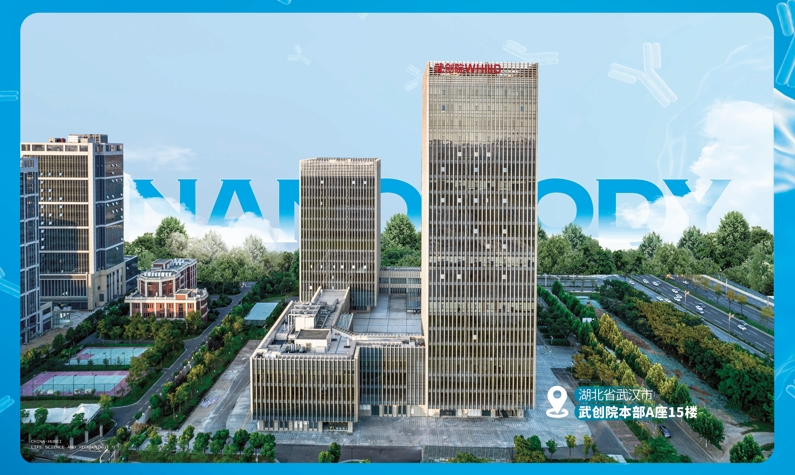
Wuhan Nanobody Life Science & Technology Co., Ltd. is a nanobody industry platform established under the lead of the Wuhan Industrial Innovation & Research Institute. Headquartered in the main building of the Institute within the East Lake High-Tech Development Zone in Wuhan, the company operates a proprietary laboratory spanning 1,400 sq.m at the Precision Medicine Industrial Base in Wuhan Bio-City. It has also established alpaca experimental and transfer bases in Zuoling, Wuhan, and Tuanfeng, Huanggang, compliant with laboratory animal standards. Currently housing over 600 alpacas, these bases can provide alpaca immunization services with "zero immunological background" assurance for research institutions and antibody drug R&D enterprises.
Nanobody Life focuses on the development, engineering, and application of nanobodies, committed to building an integrated industry-academia-research experimental public service platform. It currently possesses a full-chain technology platform encompassing antigen preparation (peptides, proteins, and RNA), antibody discovery and engineering, and biological function verification/screening. RNA antigens include those structurally and sequentially optimized for alpacas. Antibody discovery and engineering services employ multiple technological routes, including phage display and mammalian cell display. Through the complementary use of multiple platforms, it provides flexible antibody discovery and engineering services for pharmaceutical companies and research institutes, facilitating drug and reagent R&D.
Contact Number: 400-822-9180
Contact Email: marketingdept@nanobodylife.com