Knowledge Sharing

Transmembrane Nanobodies: Solving the Misfolded CFTR Challenge

Transmembrane Nanobodies: Solving the Misfolded CFTR Challenge

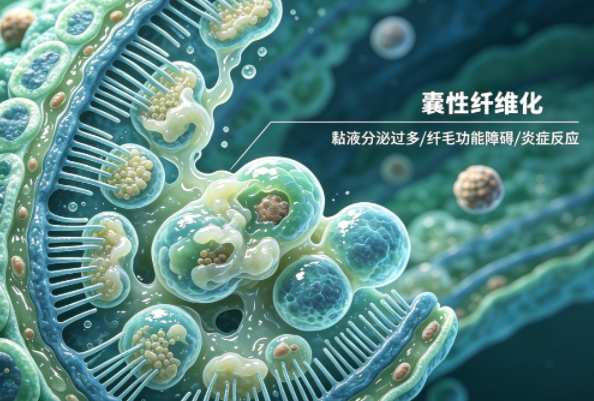
Cystic fibrosis (CF) is a common life-threatening autosomal recessive disorder affecting millions worldwide. The F508del-CFTR (cystic fibrosis transmembrane conductance regulator) mutation is the primary pathogenic culprit, present in approximately 90% of CF patients. For decades, repairing the p...
Read More...
Nanobodies Empower Innovative Drugs! First Patient Dosed in Phase III Clinical Trial of JSKN016

Nanobodies Empower Innovative Drugs! First Patient Dosed in Phase III Clinical Trial of JSKN016

Recently, nanobody applications in oncology have achieved a major breakthrough: JSKN016, a bispecific ADC independently developed by Alphamab Oncology, has dosed its first patient in a Phase III trial. This milestone signifies that nanobody‑enabled innovative drug R&D has entered a critical phase, highlighting the clinical value and application potential of nanobodies.
Read More...
Ebola Treatment Breakthrough: Nanobodies as Promising Broad-Spectrum Antivirals

Ebola Treatment Breakthrough: Nanobodies as Promising Broad-Spectrum Antivirals

A Chinese team’s latest study in Nature Communications developed BA2-1A10, the world’s first potent broad‑spectrum bispecific anti‑Ebola agent based on camel nanobodies. It overcomes the single‑strain limitation of conventional antibodies, shows excellent efficacy in vitro and in vivo, and highlights the great potential of nanobodies.
Read More...
HDM2024 IND Approval: EGFR/HER3 Synergy Against Solid Tumor Resistance

HDM2024 IND Approval: EGFR/HER3 Synergy Against Solid Tumor Resistance

Solid tumor innovative therapy advances: US FDA approves IND for injectable HDM2024, an EGFR/HER3 dual-target Bs-ADC. A Phase I trial for advanced solid tumors will launch in the US. The drug’s unique dual-target synergy brings a new option for drug-resistant solid tumors, and this article analyzes its core mechanism and clinical value via target interpretation.
Read More...
In-depth Analysis of PD-L1 Target: Why It Has Become a

In-depth Analysis of PD-L1 Target: Why It Has Become a

PD-1 immunotherapy is a classic cancer paradigm but limited by low response and resistance. PD-L1 has emerged as a core next‑generation immunotherapy target. Nanobodies, combined with 2026 advances, are overcoming clinical bottlenecks. Here we review PD-L1’s value, latest progress, and how nanobodies unlock its full potential.
Read More...
FZD4 Target: The Next

FZD4 Target: The Next

Current FEVR treatments (laser, surgery) only relieve complications without correcting fundamental vascular developmental defects, and causal therapies are absent. In 2024, Boehringer Ingelheim licensed the FZD4 agonist SZN-413 for up to $599 million, validating the target and opening a new direction for ophthalmic disease therapy. We next introduce the FZD4 target
Read More...