
Cystic fibrosis (CF) is a common life-threatening autosomal recessive disorder affecting millions worldwide. TheF508del-CFTR(cystic fibrosis transmembrane conductance regulator) mutation is the primary pathogenic culprit, present in approximately 90% of CF patients. For decades, repairing the protein dysfunction caused by this mutation has remained a critical unmet challenge in CF therapy.
Recently, a landmark study published in the top international journalNature Chemical Biology—by a team from Charité – Universitätsmedizin Berlin and the Leibniz Institute for Molecular Pharmacology (FMP) in Berlin—has developedcell-penetrating CFTR-targeting nanobodies. This work achieves, for the first time,extracellular administration with intracellular repair of disease-causing proteins, establishing a new paradigm for cystic fibrosis treatment and expanding nanobody applications from extracellular targets into the realm of intracellular proteins.
Core Challenge in CF Therapy: The F508del Mutation Traps CFTR in the Endoplasmic Reticulum
CFTR and Pathogenic Mechanism
CFTR, the cystic fibrosis transmembrane conductance regulator, is a chloride channel localized to the cell membrane. It controls water–salt homeostasis in epithelial tissues of the airways, gastrointestinal tract, and other organs, maintaining normal mucus fluidity. TheF508del mutationin the CFTR gene leads toprotein misfolding: the chloride channel fails to undergo proper maturation, is recognized by the cellular quality-control system, and is prematurely degraded, with very little reaching the cell membrane to function.
Clinical Manifestations of F508del-CFTR
This mutation directly causes abnormally thick mucus in the lungs that clogs airways, triggering recurrent infections, chronic inflammation, and eventually irreversible lung function damage. It is also accompanied by pancreatic insufficiency, malnutrition, and other multi-system complications, severely threatening patients’ lives.
Current First-Line Clinical Regimen (ETI)
The ETI triple combination therapy—small-molecule drugselexacaftor/ivacaftor/tezacaftor—partially restores F508del-CFTR function but only recovers about55% of normal channel activity. It cannot fundamentally stabilize theNBD1 (ATP-binding domain)of CFTR, creating a clear therapeutic ceiling. Moreover, small molecules struggle to precisely target intracellular misfolded proteins, revealing inherent limitations. There is an urgent clinical need for therapeutic agents with novel mechanisms.
Nanobodies as a Breakthrough: From Extracellular Guardians to Intracellular Repair Artisans
Nanobodiesare the variable domains of heavy-chain-only antibodies derived from camelids. They offer key advantages: small size, high stability, strong specificity, and ease of engineering—making them star molecules in biomedicine. However, their clinical translation has long been bottlenecked by an inability to cross cell membranes to target intracellular disease proteins, restricting use to extracellular targets.
The research team elegantly solved this problem by constructingCPP (cell-penetrating peptide)–nanobody conjugates:
- They screened and identifiedNB1, a nanobody targeting the CFTR NBD1 domain, which binds F508del-CFTR with high precision, acts as amolecular chaperone, and stabilizes the misfolded protein structure.
- They conjugated the cell-penetrating peptideR10 (CPP)to NB1 via a disulfide bond, endowing the nanobody withefficient intracellular delivery capacity—enabling direct extracellular administration to penetrate cell membranes without gene delivery.
- Inside cells, the disulfide bond is cleaved in the reducing intracellular environment, releasing functional NB1 that specifically binds and repairs F508del-CFTR.
This design preserves the high specificity of nanobodies while breaking through the cell membrane barrier, turning nanobodies intointracellular protein repair artisansfor the first time and offering a new strategy for treating misfolding-related genetic diseases.
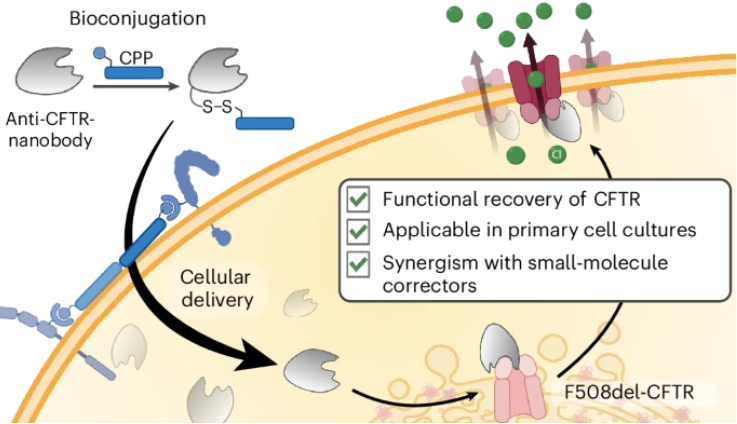
Rigorous Data Validation: Nanobodies Restore CFTR Function to Near-Normal Levels
The team validated efficacy across cell-based assays and patient-derived primary cell models with compelling data:
Efficient Intracellular Delivery and Favorable Safety
The nanobody efficiently penetrates multiple cell types, includingCFBE cells (human cystic fibrosis bronchial epithelial cells), HEK cells, and patient-derived primary airway epithelial cells, remaining stable in the cytoplasm 24 hours after administration. At concentrations ≤75 μM, cell viability exceeds 80% with no significant membrane damage, supporting strong drug-like safety.
Precise Targeting
Co-localization assays show a co-localization coefficient of0.65between the nanobody and intracellular F508del-CFTR, while control nanobodies show no specific binding—confirming precise intracellular targeting and minimal off-target effects.
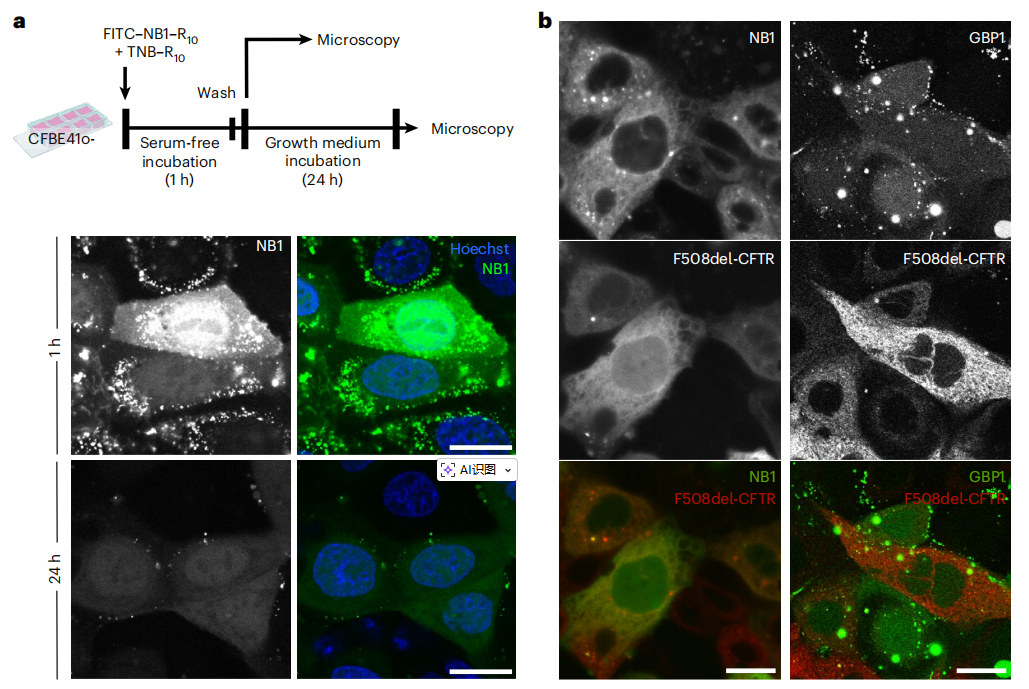
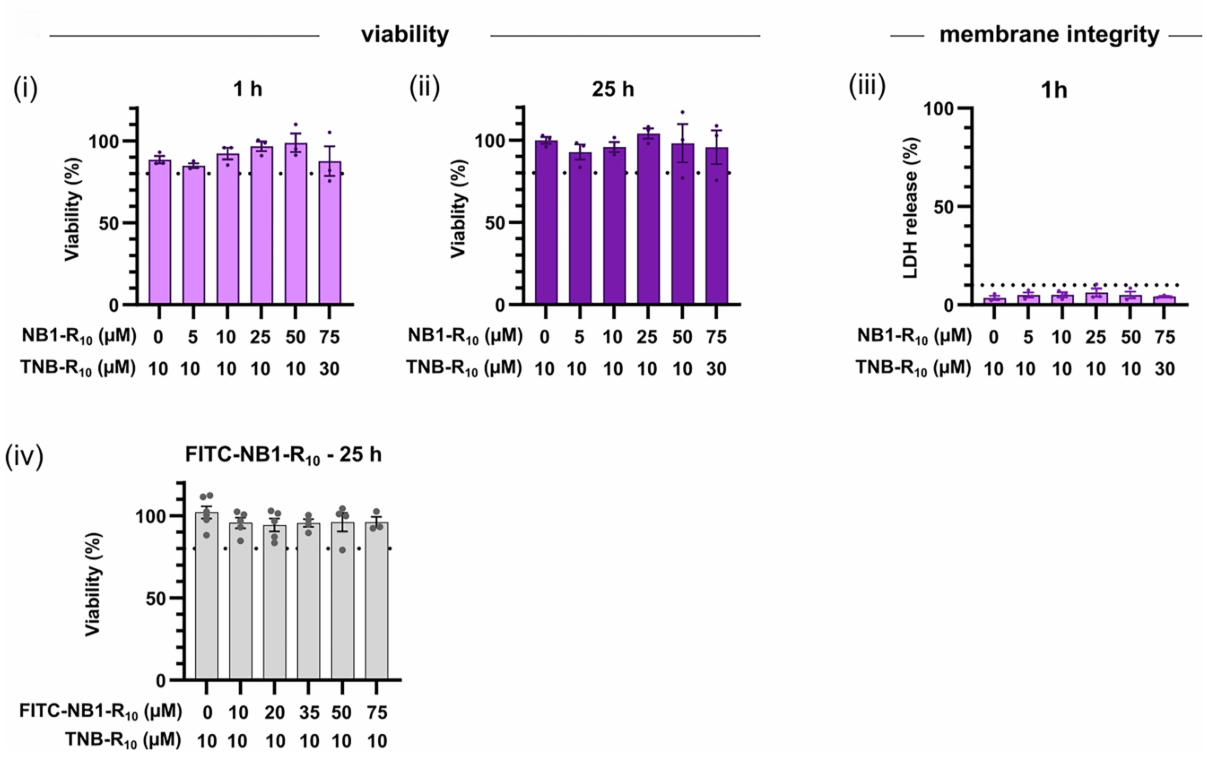
Figure 3 Analysis of cell viability following NB1 delivery to CFBE41o- cells
Rescue of F508del-CFTR Maturation and Membrane Localization
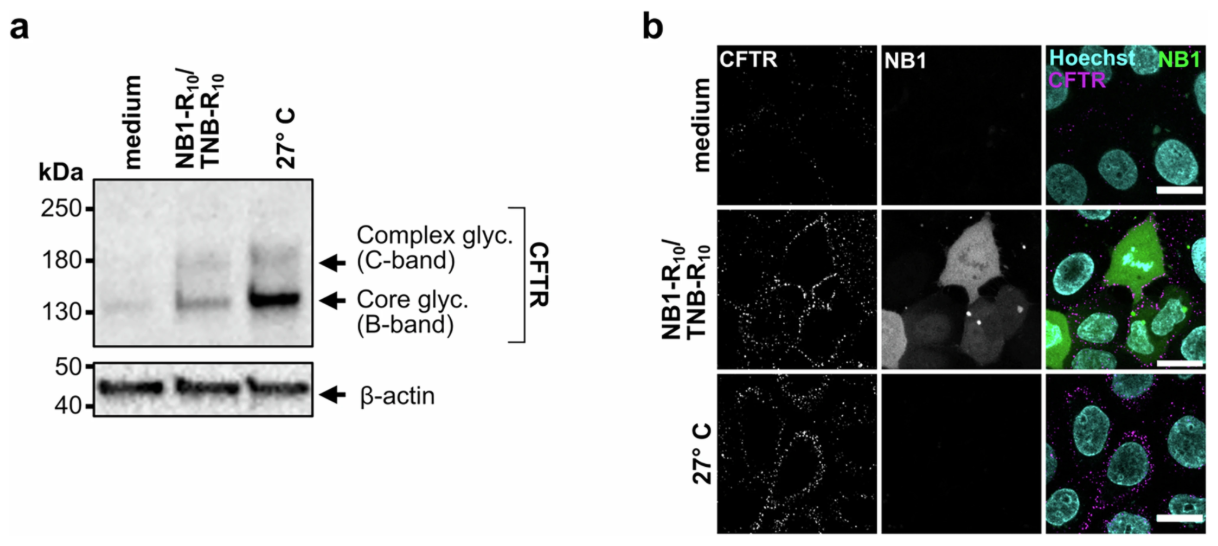
Western blot analysis shows that nanobody treatment shifts F508del-CFTR from the core-glycosylated immatureBand Bto the complex-glycosylated matureBand C, enabling successful trafficking from the endoplasmic reticulum to the cell membrane. Flow cytometry confirms significantly increased CFTR expression on the cell surface, comparable to the classic positive control of low-temperature rescue (27°C).
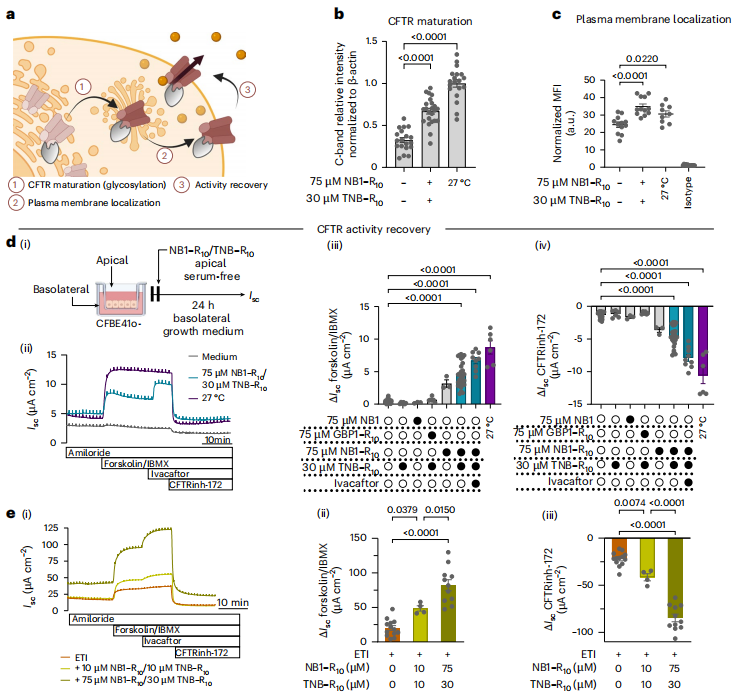
Figure 4 Nanobody treatment rescues F508del-CFTR maturation, trafficking, and chloride channel function, and enhances responses to CFTR modulators in CFBE41o- cells
Restoration of F508del-CFTR Chloride Transport Activity
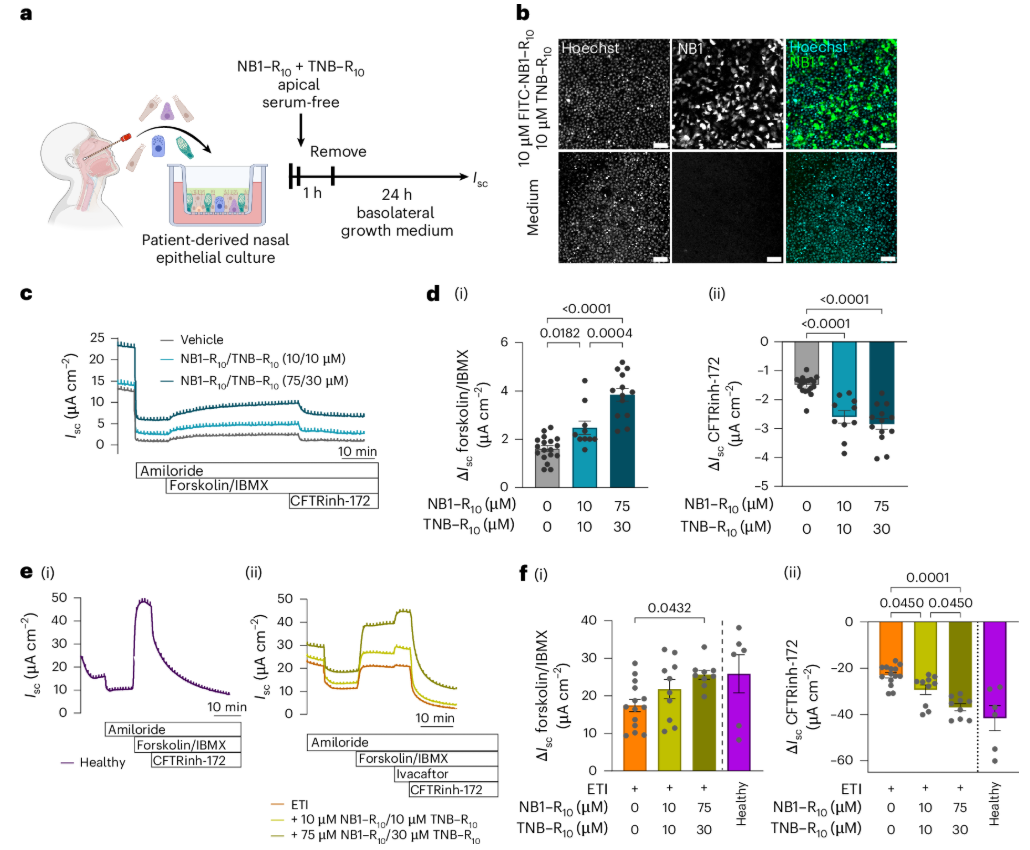
Ussing chamber functional assays demonstrate that the nanobodydose-dependently restoresF508del-CFTR chloride transport activity. At optimal concentrations (75 μM NB1-R10 + 30 μM TNB-R10), channel activity is strongly restored and sensitive to CFTR inhibitors, confirming the specificity of functional repair.
Synergy with Clinical ETI Triple Therapy
Most translationally significant: when combined with the clinical ETI regimen, the nanobody boosts CFTR function from55%(ETI alone) to nearly89%of normal levels in primary airway epithelial cells from CF patients—a1.8–3.8-fold improvement—demonstrating strong synergistic efficacy and providing a key rationale for clinical combination therapy.
Core Value of Nanobodies: Redefining Intracellular Protein-Targeted Therapy
This study not only addresses a critical challenge in cystic fibrosis but also reshapes the therapeutic landscape of nanobodies, with value across three dimensions:
- Breaking application barriersThe first cell-penetrating nanobody withextracellular delivery and intracellular actionovercomes the restriction of nanobodies to extracellular targets, creating a new tool for treating intracellular disease proteins (e.g., misfolded or dysfunctional proteins).
- Complementary mechanisms, enhanced efficacySmall molecules target the CFTR transmembrane domain, while nanobodies target the NBD1 domain. Their distinct mechanisms stabilize the protein from different sites, synergistically boosting efficacy and overcoming the limited potency of current small-molecule drugs.
- Broad applicability across diseasesThis intracellular delivery strategy is not limited to CFTR. It can be extended to numerous genetic diseases caused by protein misfolding, including Alzheimer’s disease, Parkinson’s disease, and lysosomal storage disorders, with high versatility and scalability.
- Strong clinical translation potentialNanobodies can be administered viaaerosol inhalationto directly target lung airway epithelial cells, improving targeting and reducing systemic side effects—ideally suited for local pulmonary treatment of CF and supporting rapid clinical translation.
Conclusion: Nanobodies Usher in a New Era of Intracellular Therapy
This work represents a milestone in biomedicine, advancing both precision cystic fibrosis treatment and nanobody technology. Cell-penetrating CFTR-targeting nanobodies address the core pathogenic mechanism ofF508del-CFTR misfoldingand break the technical barrier to intracellular nanobody applications, offering more effective and precise treatment hope for CF patients. It also provides areproducible therapeutic paradigmfor numerous protein-misfolding diseases worldwide.
With further optimization of delivery systems and development of inhalable formulations, these intracellular-targeting nanobodies are poised to move from the lab to the clinic, emerging as a major class of biologic drugs—alongside small molecules and conventional antibodies—to bring new therapeutic hope to patients with rare and genetic diseases.
NBLST is a nanobody industry platform initiated and established by Wuhan Industrial Innovation and Development Institute. It owns an independent laboratory covering 1,400 square meters at the Precision Medicine Industrial Base of Wuhan National Bioindustry Base. Meanwhile, it has set up an alpaca experimental base and a transit base compliant with laboratory animal standards in Zuoling, Wuhan and Tuanfeng, Huanggang respectively. At present, the bases house more than 200 alpacas in total, and can provide alpaca immunization services with "zero immune background" guarantee for research institutions and antibody drug R&D enterprises.

Contact Us:
Tel: 400-822-9180
Email: marketingdept@nanobodylife.com