
Target Introduction
TROP2 (Trophoblast Cell Surface Antigen 2)
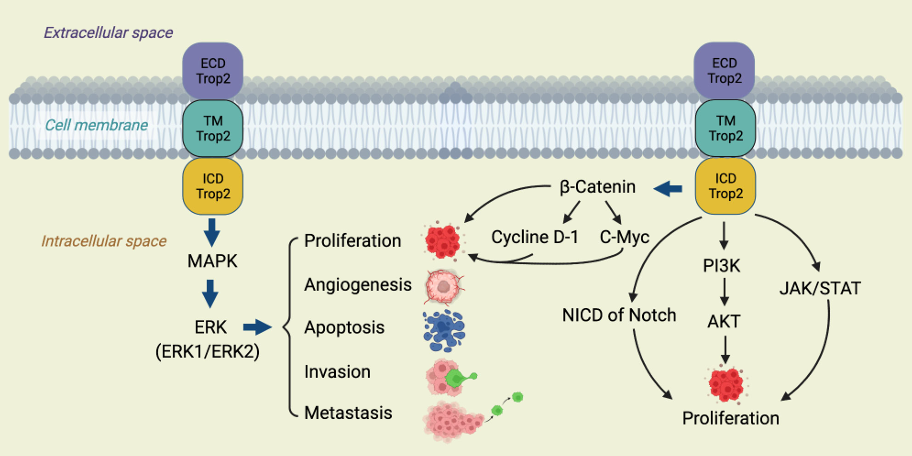
- TROP2 is a transmembrane glycoprotein belonging to the family of cell surface antigens. It is expressed at low levels in normal tissues but is highly expressed in various malignant tumors including triple-negative breast cancer (TNBC), non-small cell lung cancer (NSCLC), gastric cancer, and colorectal cancer. Its expression level is closely associated with tumor stage, invasiveness, and patient survival rate.
- TROP2 regulates tumor cell proliferation, apoptosis, invasion, and metastasis by activating signaling pathways such as PI3K/Akt and MAPK. Meanwhile, it can mediate drug endocytosis, making it an ideal target for antibody-drug conjugate (ADC) therapeutics.
-
Traditional antibodies targeting TROP2 are prone to off-target toxicity. In contrast, nanobodies can precisely recognize TROP2-specific epitopes and efficiently mediate ADC endocytosis upon binding, thereby enhancing tumor-killing efficacy while reducing damage to normal tissues. This has become a core direction for the optimization of TROP2-targeted drugs[1].
HER3 (Human Epidermal Growth Factor Receptor 3)
- It's a member of the epidermal growth factor receptor (EGFR) family and belongs to the transmembrane tyrosine kinase receptors. It is widely expressed in various normal tissues, but exhibits abnormally high expression or activation in multiple malignant tumors including breast cancer, non-small cell lung cancer (NSCLC), gastric cancer, and esophageal cancer.
- HER3 has weak intrinsic kinase activity and primarily forms heterodimers with other family members such as EGFR and HER2 to activate downstream signaling pathways including PI3K/Akt, thereby promoting tumor cell proliferation, survival, invasion, and metastasis[3], while also participating in the development of resistance to targeted therapy and chemotherapy in tumor cells.
-
Given the pivotal role of HER3 in tumor progression and the correlation between its aberrant expression and poor patient prognosis[4], HER3 has emerged as an important target for precision cancer therapy. With their advantages of high affinity and strong specificity, nanobodies can precisely bind to HER3 antigenic epitopes and block its signal transduction, providing a novel approach for the development of HER3-targeted drugs.
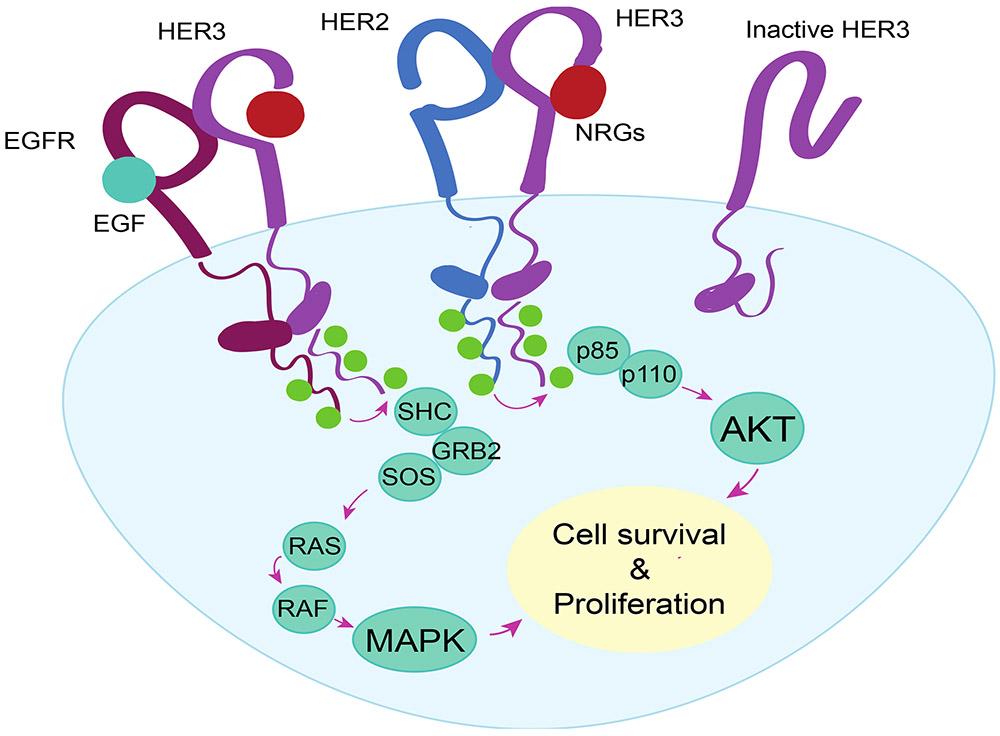
Figure 2 HER3 Dimerization and Its Signaling Cascade[5]
Drug Structure and Mechanism of Action
Drug Structure:
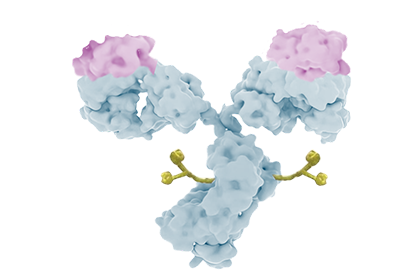
JSKN016 is a bispecific antibody targeting TROP2 and HER3 developed using single-domain antibody and bispecific antibody platforms. A homogeneous and stable ADC with a DAR of 4 is obtained via site-specific glycosylation conjugation.
Mechanism of Action:
- Upon binding to receptors on the surface of TROP2- or HER3-positive cancer cells, JSKN016 is internalized into the cells. Following internalization, the drug traffics through early endosomes, late endosomes, and ultimately reaches lysosomes.
- Owing to the cleavable linker, the linker is cleaved under acidic or enzymatic conditions in lysosomes, releasing the payload (TOPi, a topoisomerase I inhibitor) into the cancer cells. The released TOPi enters the nucleus, inhibits topoisomerase I activity, interferes with DNA replication, and thereby induces apoptosis in positive cancer cells.
-
The TOPi released within TROP2- or HER3-positive cancer cells can penetrate the cell membrane and diffuse into surrounding antigen-negative cancer cells (i.e., cancer cells that do not express TROP2 or HER3). Although these negative cancer cells are not directly targeted by the antibody, they are killed by the diffused toxic payload and undergo apoptosis as well.
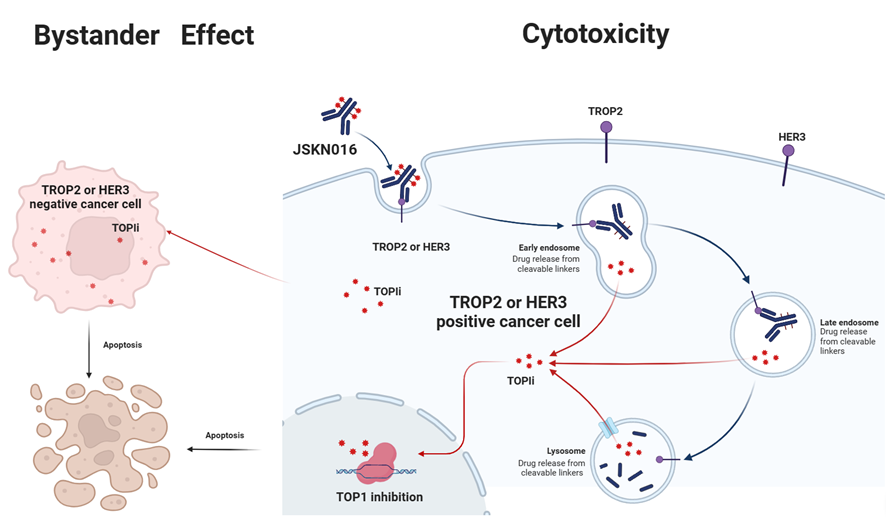
Figure 4 Mechanism of Action of JSKN016
Applications of Nanobodies
HuNbTROP2‑HSA‑MMAE is a Trop-2-targeted nanobody-drug conjugate for the treatment of Trop-2-positive pancreatic cancer. This drug employs an anti-Trop-2 nanobody fused with human serum albumin (HSA) and conjugated to MMAE, with a DAR value of 1. Compared with conventional antibodies, nanobodies confer distinct advantages: high affinity and strong binding specificity to Trop-2; extremely rapid internalization, with efficient uptake into tumor cells within 5 hours; smooth transport to lysosomes for toxin release, inducing apoptosis via the caspase‑3/9 pathway; significant in vivo efficacy: potent tumor inhibition at doses of 0.2 and 1 mg/kg, and tumor eradication at 5 mg/kg. It demonstrates excellent anti-tumor activity in pancreatic cancer models and holds great promise for clinical development[6].
Significance and Prospects
References
[1] Xu C, Zhu M, Wang Q, Cui J, Huang Y, Huang X, Huang J, Gai J, Li G, Qiao P, Zeng X, Ju D, Wan Y, Zhang X. TROP2-directed nanobody-drug conjugate elicited potent antitumor effect in pancreatic cancer. J Nanobiotechnology. 2023 Nov 6;21(1):410. doi: 10.1186/s12951-023-02183-9.
[2] Yao L, Chen J and Ma W (2023) Decoding TROP2 in breast cancer: significance, clinical implications, and therapeutic advancements. Front. Oncol. 13:1292211.
[3] Gao L, Zhang Y, Feng M, Shen M, Yang L, Wei B, Zhou Y, Zhang Z. HER3: Updates and current biology function, targeted therapy and pathologic detecting methods. Life Sci. 2024 Nov 15;357:123087.
[4] Muzi A, Arriga R, Bulfaro G, Fata F, Costanzo A, Chiarini V, Cappelletti M, Ferrara FF, Bucci F, Montemiglio LC, Savino C, Marra E, Ciliberto G, Aurisicchio L, Vallone B, Roscilli G. Novel Humanized Anti-HER3 Antibodies: Structural Characterization and Therapeutic Activity. Antibodies (Basel). 2025 Oct 6;14(4):84.
[5] Haikala HM, Jänne PA. Thirty Years of HER3: From Basic Biology to Therapeutic Interventions. Clin Cancer Res. 2021 Jul 1;27(13):3528-3539. doi: 10.1158/1078-0432.CCR-20-4465. Epub 2021 Feb 19.
[6] Xu C, Zhu M, Wang Q, Cui J, Huang Y, Huang X, Huang J, Gai J, Li G, Qiao P, Zeng X, Ju D, Wan Y, Zhang X. TROP2-directed nanobody-drug conjugate elicited potent antitumor effect in pancreatic cancer. J Nanobiotechnology. 2023 Nov 6;21(1):410.

Contact Us:
Tel: 400-822-9180
Email: marketingdept@nanobodylife.com