Market Insights

PD-1 Nanobodies and Off-the-Shelf Immune Library

PD-1 Nanobodies and Off-the-Shelf Immune Library

PD-1 is a key immunosuppressive receptor on immune cells that inhibits activation via PD-L1/PD-L2. It prevents autoimmunity under normal conditions but mediates tumor immune escape when hijacked by cancer cells. Abnormal PD-1 signaling also contributes to autoimmune diseases by suppressing immune clearance of abnormal self-cells.
Read More...
Nanobodies Reveal Angiotensin Receptor Activation Mechanism, Advancing GPCR Structural Research

Nanobodies Reveal Angiotensin Receptor Activation Mechanism, Advancing GPCR Structural Research

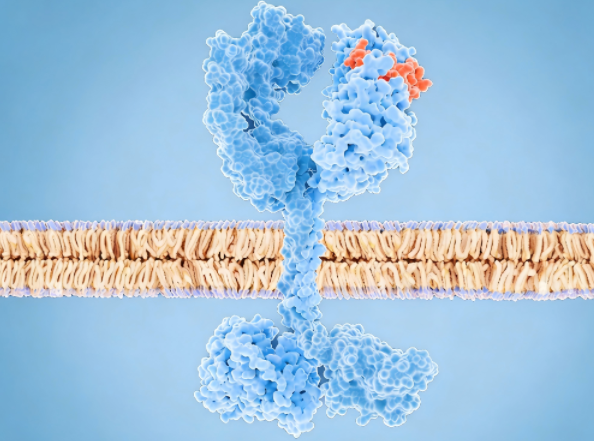
GPCRs are key membrane signal-transduction proteins regulating diverse physiological functions. AT1R is critical for blood pressure and cardiovascular health. The activation mechanism of peptide-binding GPCRs like AT1R has long been a bottleneck. Using synthetic nanobodies, researchers resolved this issue, with results published in Cell, advancing GPCR research and drug development.
Read More...
Off-the-Shelf Nanobody Immune Library Empowers Anti-Cancer Therapy: CD7 and Immune Cell Targeting

Off-the-Shelf Nanobody Immune Library Empowers Anti-Cancer Therapy: CD7 and Immune Cell Targeting

CD7 is a transmembrane glycoprotein mainly expressed on T cells, NK cells and their precursors. It is highly upregulated in hematologic malignancies including T-ALL and lymphomas. As an immunoglobulin superfamily member, CD7 mediates T-cell activation, adhesion and signaling, and serves as a key marker for T-cell malignancies. Its specific and stable expression makes it an ideal target for novel immunotherapies.
Read More...
Synergistic Enhancement of Nanobody & VSV-G for Targeted Therapy of HER2-Positive Tumors

Synergistic Enhancement of Nanobody & VSV-G for Targeted Therapy of HER2-Positive Tumors

CD8 is a membrane‑bound glycoprotein expressed on cytotoxic T cells, subsets of NK cells and developing thymocytes. As an αβ heterodimer TCR co‑receptor, it binds MHC‑I to strengthen TCR affinity and promote T‑cell activation. Essential for antiviral and antitumor immunity, CD8 serves as a key target in tumor immunotherapy and immune regulation research.
Read More...
CD8: The Core Engine Driving Precision Immunotherapy

CD8: The Core Engine Driving Precision Immunotherapy

CD8 is a membrane glycoprotein expressed on cytotoxic T cells, some NK cells and developing thymocytes. It acts as a TCR co-receptor, mostly as an αβ heterodimer, binding MHC-I to boost TCR-peptide-MHC affinity, enhance signaling and T-cell activation. Critical for antiviral and antitumor immunity, CD8 is a key target in tumor immunotherapy and immune mechanism studies.
Read More...
A New Pathway for Obesity Treatment: LGR4-Targeting Nanobody

A New Pathway for Obesity Treatment: LGR4-Targeting Nanobody

2024 data from China’s National Health Commission shows Chinese adult overweight and obesity rates at 34.3% and 16.4%, meaning over half are overweight. Obesity raises risks of diabetes, cardiovascular diseases, cancers and metabolic syndrome. By 2050, over half of adults worldwide may be affected. Given limited lifestyle intervention efficacy and drug side effects, safe and effective novel anti-obesity strategies are urgently needed.
Read More...
Targeting IL-17A/F with a Nanobody: An Emerging Force in Psoriatic Arthritis Treatment

Targeting IL-17A/F with a Nanobody: An Emerging Force in Psoriatic Arthritis Treatment

Psoriatic arthritis (PsA) is a chronic inflammatory disease impairing skin, joints and entheses, severely reducing patients’ quality of life. Conventional DMARDs and monoclonal antibodies show limited efficacy, poor tissue penetration and low synovial drug levels. IL‑17A and IL‑17F jointly drive PsA inflammation, so single‑cytokine inhibition is inadequate. Novel dual‑targeting antibodies with improved tissue penetration are urgently needed to overcome these therapeutic bottlenecks.
Read More...
Nanobody-Based Trispecific NK Cell Engager: A Groundbreaking Study in T-Cell Malignancy Treatment

Nanobody-Based Trispecific NK Cell Engager: A Groundbreaking Study in T-Cell Malignancy Treatment

T-cell malignancies are aggressive hematologic tumors with high relapse and poor prognosis. CD5, a key marker of malignant T-cells, is also present on normal T-cells, so CD5-targeted CAR-T cannot distinguish tumor from normal cells, causing T-cell depletion and immune deficiency. NK cells are ideal effectors as they kill tumors without prior sensitization and do not express CD5, enabling safe targeting of CD5+ malignant T-cells.
Read More...
Nanobody-Powered Canine Cancer Immunotherapy Ushers in a New Era for Companion Animal Health

Nanobody-Powered Canine Cancer Immunotherapy Ushers in a New Era for Companion Animal Health

Immune checkpoint inhibitors have revolutionized human cancer therapy, driving demand for comparable treatments in dogs. Canine spontaneous tumors resemble human cancers, making them excellent translational models. Yet specific anti-canine PD-L1 immunotherapies remain scarce. Current antibodies suffer from immunogenicity and high costs. Nanobody-based inhibitors could benefit veterinary oncology and inform human immunotherapy.
Read More...
Market Status of the Star Target GLP-1R and the Application of Nanobodies

Market Status of the Star Target GLP-1R and the Application of Nanobodies

In the 1970s, scientists discovered the first incretin hormone, GIP (Glucose-Dependent Insulinotropic Polypeptide), and later identified the second incretin hormone: Glucagon-Like Peptide-1 (GLP-1). GLP-1 is secreted by intestinal L cells in the distal small intestine and proximal colon, encoded by the proglucagon gene, and is a polypeptide consisting of 30 amino acids[1-3].
Read More...
CXCR4: An Important Chemokine Receptor with Multiple Application Fields

CXCR4: An Important Chemokine Receptor with Multiple Application Fields

Chemokines are a class of small cytokines or signaling proteins secreted by cells. They are so named because of their ability to induce directional chemotaxis of nearby responsive cells. All their receptors belong to the G protein - coupled receptor (GPCR) family with 7 - transmembrane domains, and are mainly expressed in cells such as neutrophils, macrophages, epithelial cells, smooth muscle cells, and fibroblasts [1].
Read More...