
Target Profiling
Molecular Architecture of CD25
CD25, officially named interleukin-2 receptor α subunit (IL-2Rα), is a single-pass transmembrane glycoprotein and an indispensable component of the trimeric IL-2 receptor complex (IL-2Rα/IL-2Rβ/IL-2Rγ). CD25 only enhances IL-2 binding affinity via its extracellular domain and lacks intracellular signaling motifs. Signal transduction can only be triggered upon assembly of the complete IL-2R α/β/γ ternary complex.
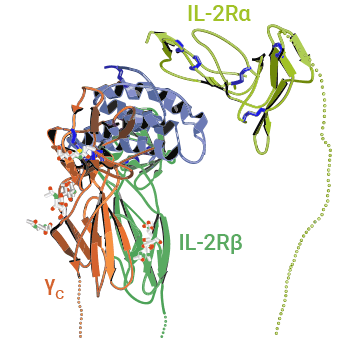
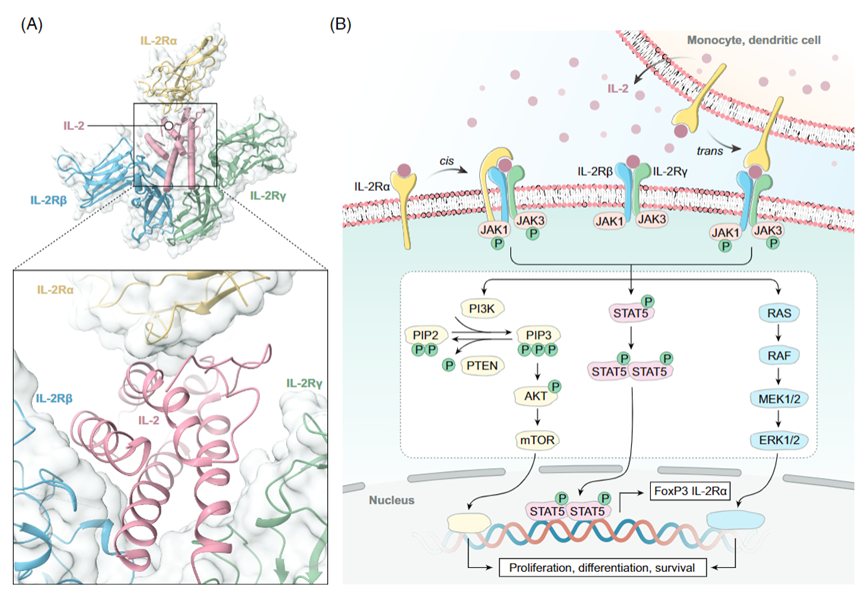
Figure 1. Schematic diagram of IL-2 and its α/β/γ receptor complex structure[1]
When IL-2 binds to the extracellular domain of CD25, conformational changes induce heterodimerization of IL-2Rβ and IL-2Rγ, forming a quaternary IL-2-receptor complex that activates three core signaling cascades: JAK/STAT5, PI3K/Akt/mTOR and MAPK, which collectively govern cell proliferation, survival and immune differentiation.
Physiological Roles Under Normal Conditions
CD25 is predominantly overexpressed on regulatory T cells (Tregs), with marginal expression on activated effector T cells and NK cells. In healthy individuals, the IL-2/CD25 axis governs the proliferation and activation of Tregs to maintain immune tolerance, preventing autoimmune attacks against endogenous tissues and serving as a core modulator of immune homeostasis.
Immunosuppressive Mechanisms in the Tumor Microenvironment
Solid tumors actively recruit large quantities of CD25-high Tregs to establish an immunosuppressive niche:
- Tregs competitively sequester IL-2 within the microenvironment, depriving cytotoxic T cells and NK cells of essential activation cytokines and blunting anti-tumor immunity;
- Tregs secrete multiple inhibitory cytokines to further impair the cytolytic capacity of immune cells, enabling tumor immune evasion;
- Hematological malignancies and partial solid tumors aberrantly express membrane CD25, which can act as a specific biomarker for targeted drug delivery.
Composition & Dual Mechanism of Action of DS1025a
Three Core Building Blocks of DS1025a
DS1025a represents a state-of-the-art DXd-based ADC with three precisely engineered components:
- Targeting antibody: Specifically recognizes and binds cell-surface CD25 to achieve tumor-specific enrichment;
- Cleavable GGFG linker: Only hydrolyzed within the lysosomal acidic compartment to minimize systemic off-target toxicity;
- DXd payload: A potent topoisomerase I inhibitor that blocks DNA replication and repair to trigger tumor cell apoptosis;
- DAR = 7.9: Each antibody conjugate carries nearly eight cytotoxic molecules, delivering robust single-molecule anti-tumor potency.
Dual Anti-Tumor Mode of Action
After intravenous administration, the ADC selectively binds CD25-positive Tregs and CD25-expressing tumor cells and undergoes endocytosis. Intracellular lysosomal proteases cleave the GGFG linker to release free DXd payload, which eliminates immunosuppressive Tregs and malignant cells simultaneously. Depletion of intra-tumoral Tregs dismantles the immunosuppressive barrier, unlocking endogenous anti-tumor immunity and realizing a dual therapeutic effect: direct tumor killing plus immune reactivation.
Two Distinct Categories of Anti-CD25 Antibodies & Comparative Advantages of DS1025a
Globally developed anti-CD25 antibodies fall into two functionally distinct categories:
- l IL-2-blocking antibodies (Representatives: Basiliximab, Anti-Tac, ADCT-301, RG-6292) These antibodies bind the IL-2 competitive epitope on CD25, fully disrupting IL-2-dependent signaling cascades. In vitro assays verify that they suppress IL-2-mediated T cell proliferation. Though clinically deployed for organ transplant rejection prophylaxis, their broad inhibition of effector T cells introduces severe systemic immunosuppression when applied for oncology treatment.
- l Non-IL-2-interfering antibodies (Representatives: MAb1/MAb2 from Patent WO2024204629, parent antibody of DS1025a) This class targets cryptic, non-competitive epitopes on CD25’s extracellular domain. Antigen binding does not interfere with IL-2-receptor interaction or STAT5 phosphorylation, enabling selective depletion of intra-tumoral Tregs while fully preserving the anti-tumor activity of effector T cells — an optimal design for solid tumor therapy.
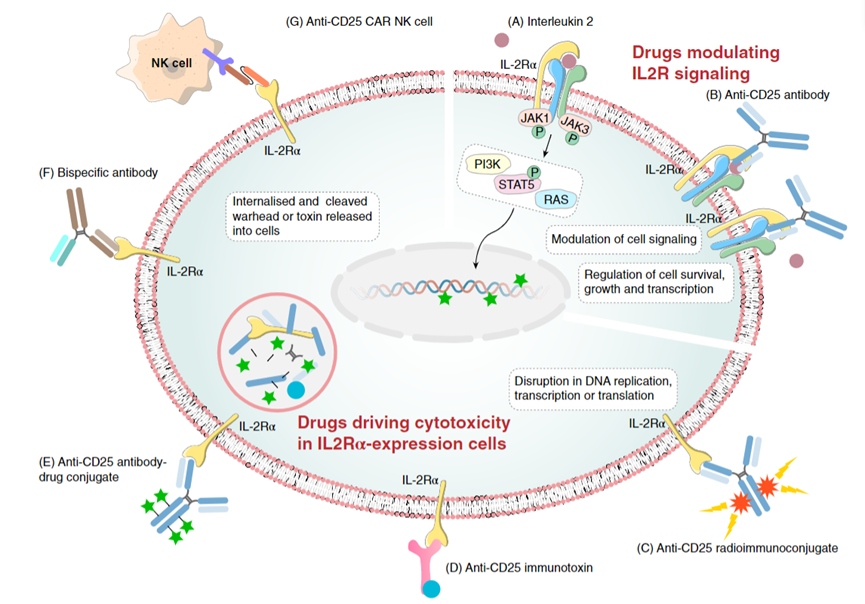
Figure 3 Summary of therapeutic modalities targeting the CD25 antigen [2]
Limitations of Conventional Full-Length mAbs & Unique R&D Merits of Nanobodies for CD25 Programs
Drawbacks of Traditional Monoclonal Antibodies
- Large molecular size restricts penetration into dense tumor stroma, failing to reach Tregs infiltrated deep within tumor lesions;
- Limited epitope coverage frequently drives off-target cross-reactivity with peripheral activated T cells, causing unwanted systemic immune suppression;
- Prolonged in vivo circulation leads to sustained damage to normal immune compartments, narrowing the therapeutic index;
- Mammalian cell-based expression platforms entail complex construction, lengthy screening cycles and high upstream production costs.
Five Core Advantages of Nanobodies in CD25 Therapeutic Development
- Superior deep tumor penetration Nanobodies consist solely of the heavy-chain variable domain (VHH), with a molecular weight only one-tenth of full-length IgG. Their compact architecture enables facile diffusion through dense tumor extracellular matrix, allowing specific targeting of deep-tissue Tregs and resolving the poor tumor infiltration limitation of conventional antibodies.
- Enhanced antigen specificity via cryptic epitope recognition Short, flexible CDR loops empower nanobodies to access narrow, concealed epitopes on CD25 inaccessible to full-length mAbs. Researchers can readily screen VHH clones that exclusively bind intra-tumoral Tregs with minimal cross-reactivity against circulating normal immune cells, drastically reducing off-target toxicities.
- Modular engineering for diversified therapeutic formats Nanobodies serve as versatile targeting payloads for ADCs; they can be concatenated to generate multivalent or bispecific constructs, or fused with IL-2/CD3 functional domains to construct immune agonists and T cell engagers, accommodating diverse pipeline requirements.
- Outstanding physicochemical stability supports multiple administration routes Nanobodies exhibit strong resistance to pH fluctuations and thermal stress with low aggregation propensity. Beyond standard intravenous infusion, they can be formulated for intratumoral injection and aerosol inhalation to reduce systemic exposure and improve safety profiles.
- Low expression barriers shorten screening and manufacturing timelines Nanobodies can be efficiently produced in E. coli or yeast prokaryotic systems without mammalian cell culture. High-throughput library panning and iterative candidate optimization accelerate early-stage target validation and cut overall R&D expenditure.
References
[1] Wang X, Rickert M, Garcia KC. Structure of the Quaternary Complex of Interleukin-2 with Its α, ß, and γ Receptors. Science, 2005, 310(5751): 1159–1163.
[2] Peng Y, et al. CD25: A potential tumor therapeutic target. International Journal of Cancer, 2023, 152: 1290–1303.
Nanobody Full-Spectrum Customized Services byNBLST
NBLST is a nanobody industry platform initiated and established by Wuhan Industrial Innovation and Development Institute. It owns an independent laboratory covering 1,400 square meters at the Precision Medicine Industrial Base of Wuhan National Bioindustry Base. Meanwhile, it has set up an alpaca experimental base and a transit base compliant with laboratory animal standards in Zuoling, Wuhan and Tuanfeng, Huanggang respectively. At present, the bases house more than 200 alpacas in total, and can provide alpaca immunization services with "zero immune background" guarantee for research institutions and antibody drug R&D enterprises.
NBLST focuses on the research, development, engineering and application of nanobodies, and is committed to building an integrated industry-university-research public experimental service platform. The company has established a full-chain technology platform covering antigen preparation (polypeptides, proteins and RNA), antibody discovery and engineering modification, as well as biological function validation and screening. Among these, its RNA antigens include sequence- and structure-optimized RNA products suitable for alpaca immunization.Based on the proprietary NabLib® platform, the company employs the improved pDual bifunctional phage display technology. While retaining the high-efficiency development advantages of traditional phage display, this technology enables seamless connection with high-level expression in mammalian cells, significantly improving the efficiency of eliminating problematic molecules. Its NabLib® mammalian cell display technology not only enhances the developability of antibody molecules, but also allows flexible selection of screening formats, providing reliable support for downstream antibody applications and detection.Through the synergistic complementation of multiple platforms, the company provides flexible and efficient antibody discovery and engineering services for pharmaceutical companies and research institutions, supporting the development of innovative drugs and diagnostic reagents.