
In recent years, tumor immunotherapy has undergone rapid iterative upgrades, with T-cell engager (TCE) therapeutics emerging as a core R&D focus for treating solid and hematological malignancies. Nevertheless, conventional bispecific antibodies constructed from single-chain variable fragments (scFv) suffer from fatal drawbacks including structural instability, propensity for aggregation, poor tissue penetration, and exclusive targeting of cell-surface antigens. Restricted by the scope of available antigen targets, over 70% of intracellular tumor antigens remain untargetable, severely limiting the clinical efficacy and application scope of immunotherapies. Technological innovations centered on nanobodies have completely broken this industry bottleneck, positioning nanobodies as core R&D tools for next-generation tumor immunotherapeutics.
Nanobodies: Core Enabler for Targeting Intracellular Antigens, Outperforming Conventional Antibody Architectures
The core advantages demonstrated in this study stem entirely from the unique molecular properties of nanobodies—innovative strengths that cannot be replicated by traditional scFv frameworks.
Structural stability and facile engineeringmodification:
Nanobodies retain only the heavy-chain variable domain, eliminating VH-VL structural mismatches, aggregation, and degradation issues prevalent in conventional antibodies. They can be efficiently expressed via prokaryotic systems with high purity and consistent batch-to-batch performance, drastically lowering manufacturing and industrialization barriers for therapeutics. SDS-PAGE and Western Blot analyses confirm that TCRm Bi-NbTE nanobodies achieve protein purity exceeding 90%, featuring homogeneous protein structures with negligible aggregation or degradation—evidence of their superior solubility and expressibility. (See Figure 1 c,d,f,g)
Dramatically expanded target antigenspectrum:
TCR-mimetic nanobodies specifically recognize pMHC complexes presented on tumor cell surfaces, enabling targeting of intracellular tumor antigens such as WT1 and GPC3 that are inaccessible to traditional antibodies, thereby vastly expanding the library of druggable tumor targets and covering a broader range of refractory malignancies. Molecular modeling verifies specific binding of nanobodies to HLA-A2/WT1 and HLA-A2/GPC3 pMHC complexes. Flow cytometry binding assays confirm exclusive specific binding to antigen-positive tumor cells, allowing precise recognition of tumor-specific intracellular antigens presented via MHC. (See Figure 1 a,b,e,h,i)
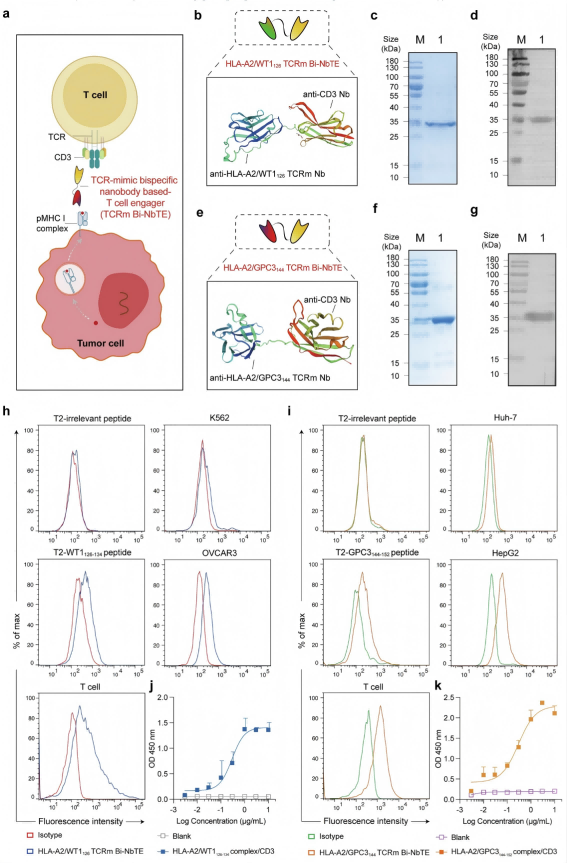
Figure 1. Generation and characterization of TCRm Bi-NbTE.
High targeting specificity and superior safetyprofile:
These nanobodies selectively recognize HLA-A2-restricted tumor antigen complexes, exclusively lysing antigen-positive tumor cells while sparing healthy cells, with no observable toxic side effects in animal models—addressing the off-target toxicity pain point of conventional immunotherapies. In vitro cytotoxicity assays demonstrate no off-target lysis activity against irrelevant antigen-expressing cells. In vivo animal studies reveal unaltered mouse body weight, normal liver and kidney function, and unchanged inflammatory cytokine levels with no treatment-related adverse events, affirming outstanding targeting safety. (See Figure 2, Figure 3)
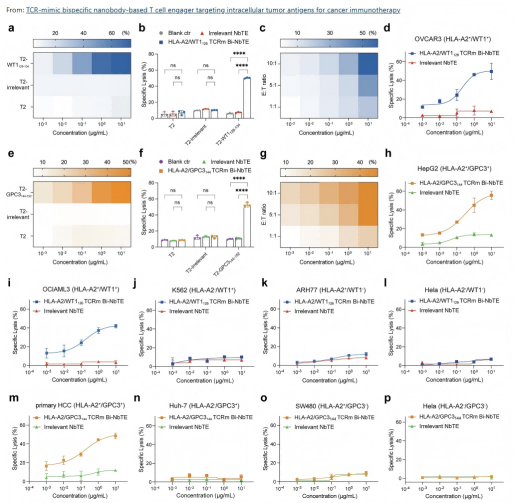
Figure 2. TCRm Bi-NbTE mediates specific T-cell-dependent cytotoxicity against target cells expressing pMHC complexes invitro.
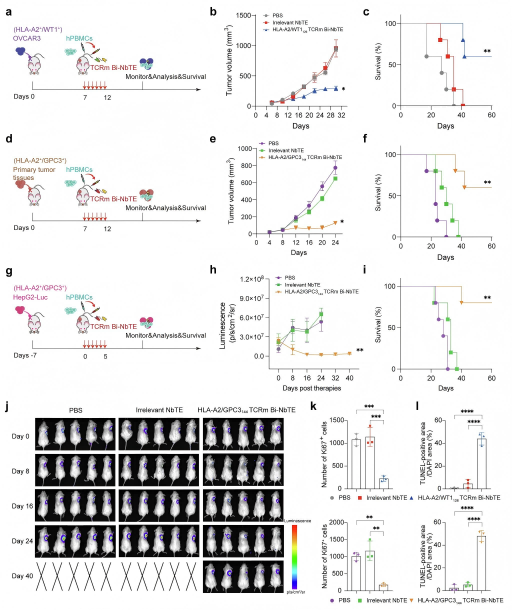
Figure 3. Antitumor efficacy of TCRm Bi-NbTE across multiple xenograft mouse models.
Potent activation of antitumorimmunity:
Bispecific nanobodies simultaneously bind CD3ε on T cells and tumor-specific pMHC complexes, efficiently recruiting and activating T cells to drive T-cell proliferation, tumor infiltration, andthe release of immune effector cytokines. Across CDX and PDX animal models, the agent markedly suppresses tumor growth and prolongs survival, exhibiting robust in vivo antitumor activity. Experimental data show significant upregulation of T-cell activation markers CD25 and CD69, enhanced T-cell proliferation, and elevated secretion of IFN-γ and IL-2. In vivo models demonstrate increased intratumoral T-cell infiltration, suppressed tumor proliferation, accelerated tumor cell apoptosis, and prolonged survival of tumor-bearing mice. (See Figure 3, Figure 4, Figure 5)
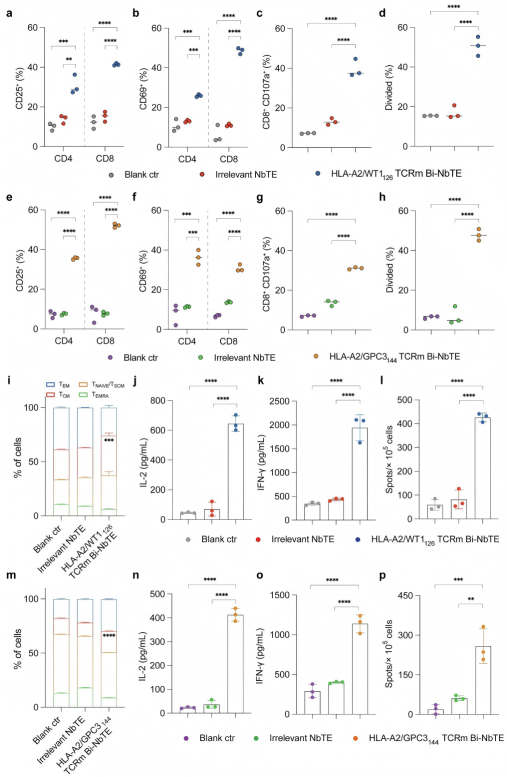
Figure 4. TCRm Bi-NbTE induces T-cell activation and effectorfunction.
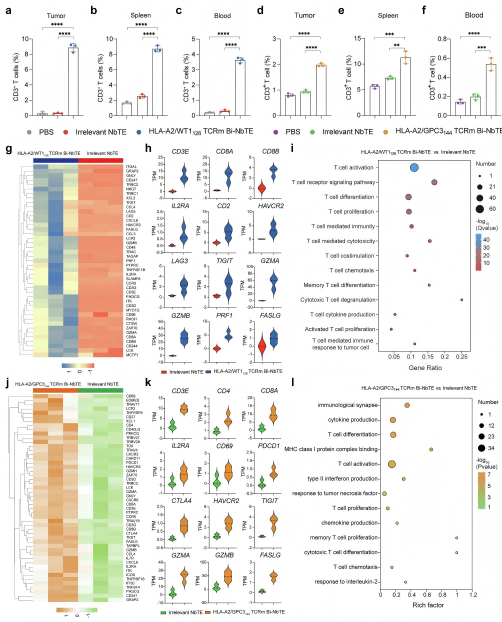
Figure 5. TCRm Bi-NbTE boosts intratumoral T-cell function via enhanced antitumor immune responses.
Application Outlook: Nanobodies as the Gold-Standard Scaffold for Next-Generation Immunotherapeutics
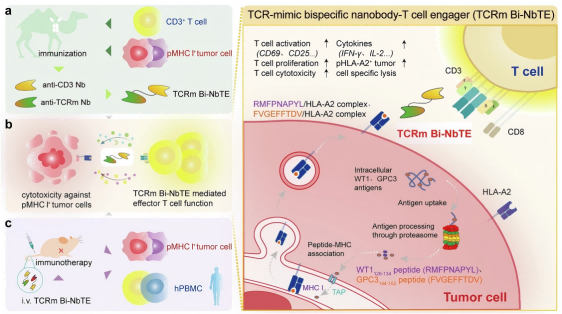
This study fully confirms that fully nanobody-based bispecific T-cell engagers possess core advantages over conventional BiTE and ImmTAC therapeutics, including modular design, rapid iterative engineering, and broad adaptability. Their versatile engineering capacity enables rapid customization for diverse intracellular antigens and neoantigen targets. Beyond treatment of multiple solid and hematological malignancies, including hepatocellular carcinoma, ovarian cancer, and leukemia, further optimization of druggability can be achieved via half-life extension, multivalent engineering, and combinatorial modification strategies, establishing nanobodies as a central developmental direction for precision tumor immunotherapy with immense commercial and clinical translation potential. The mechanistic schematic (Figure 6) validates the modular design principle and T-cell redirection killing mechanism of this nanobody therapeutic platform, demonstrating universal compatibility with all pMHC intracellular targets and exceptional platform scalability.Beyond oncology immunotherapy, nanobodies leverage their compact molecular size, exceptional stability, high specificity, facile modifiability, and robust tissue penetration to gain traction across diverse verticals, including autoimmune disorders, inflammatory diseases, diagnostic reagents, and targeted delivery systems. Gradually displacing conventional monoclonal antibodies, nanobodies have emerged as a pivotal hotspot for innovative biopharmaceutical R&D.
NBLST is a nanobody industry platform initiated and established by Wuhan Industrial Innovation and Development Institute. It owns an independent laboratory covering 1,400 square meters at the Precision Medicine Industrial Base of Wuhan National Bioindustry Base. Meanwhile, it has set up an alpaca experimental base and a transit base compliant with laboratory animal standards in Zuoling, Wuhan and Tuanfeng, Huanggang respectively. At present, the bases house more than 200 alpacas in total, and can provide alpaca immunization services with "zero immune background" guarantee for research institutions and antibody drug R&D enterprises.
NBLST focuses on the research, development, engineering and application of nanobodies, and is committed to building an integrated industry-university-research public experimental service platform. The company has established a full-chain technology platform covering antigen preparation (polypeptides, proteins and RNA), antibody discovery and engineering modification, as well as biological function validation and screening. Among these, its RNA antigens include sequence- and structure-optimized RNA products suitable for alpaca immunization.Based on the proprietary NabLib® platform, the company employs the improved pDual bifunctional phage display technology. While retaining the high-efficiency development advantages of traditional phage display, this technology enables seamless connection with high-level expression in mammalian cells, significantly improving the efficiency of eliminating problematic molecules. Its NabLib® mammalian cell display technology not only enhances the developability of antibody molecules, but also allows flexible selection of screening formats, providing reliable support for downstream antibody applications and detection.Through the synergistic complementation of multiple platforms, the company provides flexible and efficient antibody discovery and engineering services for pharmaceutical companies and research institutions, supporting the development of innovative drugs and diagnostic reagents.