
On June 12, 2026, XKH001 injection, a monoclonal antibody targeting interleukin-25 (IL-25), completed the first patient enrollment and administration in its Phase II clinical trial for chronic obstructive pulmonary disease (COPD). This milestone progress marks a major breakthrough in the clinical translation of the IL-25 target for respiratory diseases, and also sparks in-depth discussions across the industry on the potential value of nanobodies, the next-generation antibody technology, in the research and development (R&D) of innovative drugs.
IL-25 Target: An Inflammatory "Switch" from the Perspective of Structural Biology
Structural Characteristics
Interleukin-25 (IL-25), also known as IL-17E, is a key member of the IL-17 cytokine family. Its gene is located on human chromosome 14 (14q11.2). Structurally, IL-25 adopts a classic cysteine knot fold, and conserved cysteine residues form intramolecular disulfide bonds to maintain the stability of its spatial conformation. Distinct from other members of the family, IL-25 exerts its biological functions in the form of a homodimer. The two monomers bind tightly via hydrophobic interactions to form a butterfly-shaped spatial configuration.
Receptor Complex Formation
The assembly mechanism of receptor complexes is critical for the activation of IL-25 signaling. IL-25 forms a functional signaling complex through a two-step binding process. Firstly, it binds to the IL-17RB subunit (also referred to as IL-17BR) with high affinity to generate a binary complex. Subsequently, it recruits the IL-17RA subunit as a co-receptor, ultimately forming a 2:2:2 ternary signaling complex composed of IL-25, IL-17RB and IL-17RA. Crystal structure analysis reveals that two IL-17RA subunits attach to both sides of the binary complex like a pair of wings, and this unique spatial arrangement lays a structural foundation for downstream signal transduction.
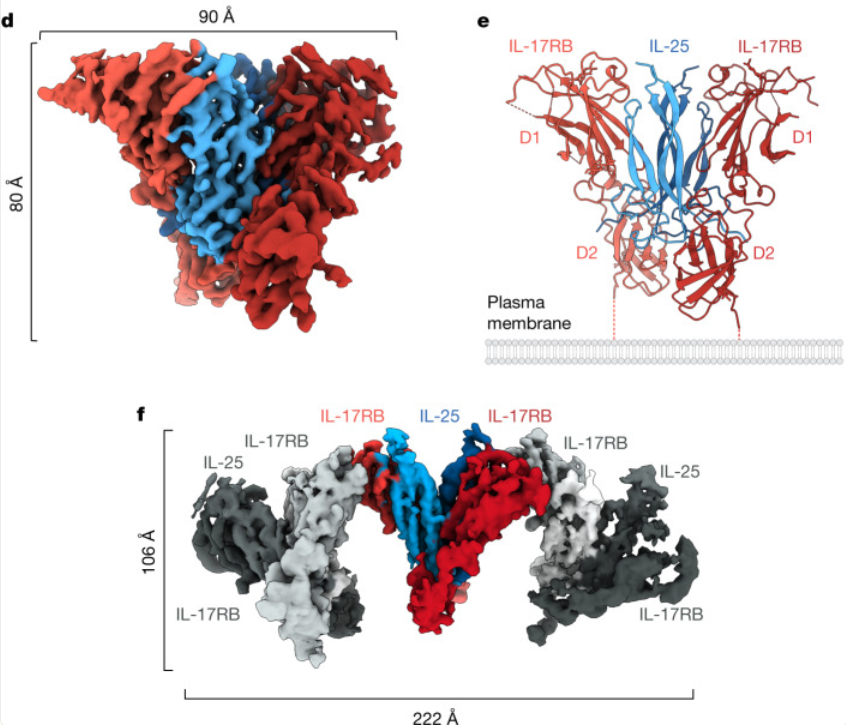
Figure 1 Ternary Signaling Complex of IL-25–IL-17RB–IL-17RA (Source: Wilson SC, et al. Nature, 2022, 609: 622-629)
Signaling Pathway
Upon the formation of the receptor complex, the intracellular SEFIR domains recruit the adaptor protein Act1, which further activates the E3 ubiquitin ligase TRAF6. This cascade eventually triggers two canonical inflammatory signaling pathways, NF-κB and MAPK. The activation of this signaling axis directly amplifies Th2-type immune responses and serves as a core pathogenic mechanism underlying various inflammatory diseases.
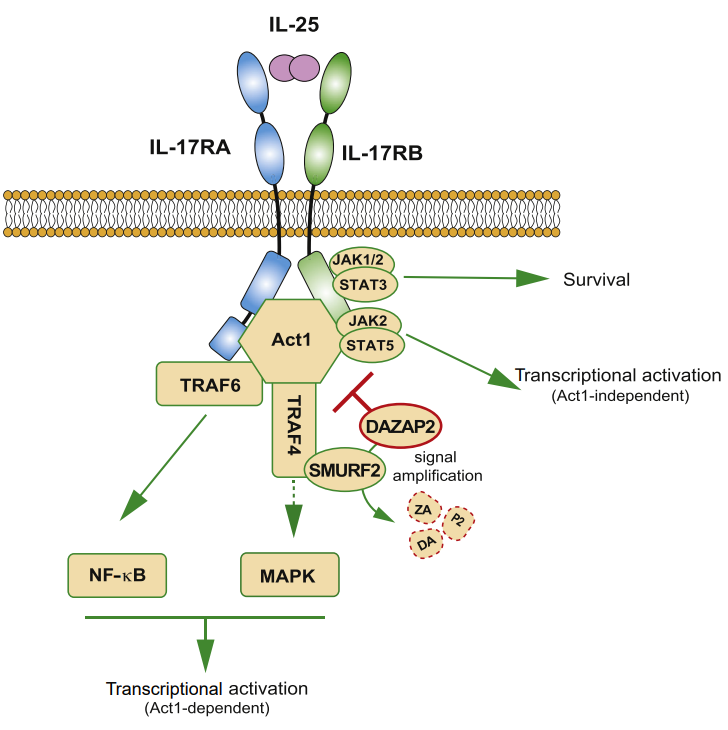
Figure 2 IL-25 Signaling Pathway (Source: Borowczyk J, et al. J Allergy Clin Immunol, 2021, 148: 40-52)
IL-25: A Key Upstream Regulator of Eosinophilic Chronic Obstructive Pulmonary Disease (COPD)
Overview of COPD
COPD ranks as the third leading cause of death worldwide. Approximately 15% to 40% of COPD patients present an eosinophilic phenotype. As an epithelium-derived alarmin, IL-25 acts as a "first responder" to lung injury. When the airway is exposed to harmful irritants such as cigarette smoke and air pollutants, IL-25 is secreted by tuft cells, initiating an inflammatory cascade by activating group 2 innate lymphoid cells (ILC2s) and Th2 cells.
Pathogenic Mechanisms
The pathogenic mechanism involves four core aspects: directly inducing the secretion of IL-4, IL-5 and IL-13; driving eosinophil recruitment; mediating airway remodeling; and forming a positive feedback loop with IL-33 and TSLP to exacerbate inflammation. Clinical data demonstrate that the IL-25 level in COPD patients is significantly positively correlated with eosinophil counts, declined lung function and increased frequency of acute exacerbations.
As the world’s first anti-IL-25 antibody advancing into Phase II clinical trials, XKH001 specifically blocks the IL-25 signaling pathway, offering a novel targeted therapeutic strategy for patients with eosinophilic COPD.
Nanobodies: A Technological Revolution for Next-Generation Antibody Drugs
The clinical breakthrough of XKH001 further validates the great potential of cytokine-targeted therapy. Nevertheless, conventional monoclonal antibodies still face multiple challenges in the treatment of pulmonary diseases, including limited tissue penetration capacity, inability to recognize hidden epitopes, complex production processes and restricted administration routes. The emergence of nanobody technology is fundamentally reshaping the R&D paradigm of antibody drugs.
Nanobodies (Nbs) are antibody fragments derived from the variable domains of heavy-chain-only IgG antibodies naturally found in Camelidae species and cartilaginous fish. Their unique structural and functional properties render them promising tools for disease diagnosis and therapeutic intervention.
- Superior tissue penetration: Composed solely of heavy-chain variable domains, nanobodies measure roughly 2.5×4 nm in size. They can penetrate tissue microenvironments inaccessible to conventional antibodies and effectively cross the pulmonary mucus layer to achieve full coverage of deep-seated targets.
- Recognition of hidden epitopes: The long CDR3 loop of nanobodies forms a finger-like protrusion that can insert into enzyme active pockets, receptor grooves and hidden sites of pathogens. It is capable of recognizing the conformational epitopes of IL-25 dimers and the intracellular activated conformations of GPCRs. For cytokines like IL-25, nanobodies can target the conformational epitopes at the dimer interface to achieve potent neutralizing activity. Meanwhile, nanobodies are currently the only antibody format that can efficiently recognize the intracellular conformations of multi-transmembrane GPCR targets.
- Extreme environmental stability: Lacking the hydrophobic core of conventional antibodies, nanobodies maintain their conformation via intramolecular disulfide bonds and hydrogen bond networks. They can withstand high temperatures up to 60 °C and a wide pH range of 2–11, enabling room-temperature storage and the development of inhalation formulations.
- Flexible engineering modification: Their simple structure facilitates genetic engineering. Multivalent or bispecific molecules can be constructed to realize multi-target synergistic effects. Fc fusion can also be applied to extend half-life and endow molecules with ADCC effector functions. Such modular design makes nanobodies an ideal platform for developing next-generation multi-target drugs.
- Low-cost large-scale production: Nanobodies can be efficiently expressed inEscherichia coli or yeast with a yield at the gram-per-liter level. Their production cost is only 1/10 to 1/5 of that of conventional monoclonal antibodies, which greatly improves drug accessibility.
Conclusion
The launch of XKH001’s Phase II clinical trial represents a critical leap for the IL-25 target from basic research to clinical application. The maturation of nanobody technology, in turn, opens up vast possibilities for the development of next-generation drugs in this field. As an innovative enterprise focusing on nanobody technology, Nabody Life firmly believes that breakthroughs in next-generation antibody drugs rely not only on the discovery of new targets, but also on the innovation of technological platforms.From IL-25 to a broader spectrum of respiratory diseases, from single-target blockade to multi-target synergistic intervention, and from systemic administration to localized precise delivery, nanobodies are redefining the boundaries of antibody drug R&D by virtue of their unique structural advantages and engineering flexibility. It is reasonable to anticipate that with continuous technological advancement, nanobodies will bring more efficacious, safer and accessible treatment options to patients suffering from COPD, asthma, pulmonary fibrosis and other respiratory diseases, ultimately fulfilling the medical vision of "free breathing for everyone".In this golden era of antibody drugs, nanobodies stand for more than a technological breakthrough — they embody a brand-new therapeutic philosophy: creating maximum medical value with minimal molecular size.
References
[1] Alexander E, Leong KW. Discovery of nanobodies: a comprehensive review of their applications and potential over the past five years. J Nanobiotechnology. 2024 Oct 26;22(1):661. doi: 10.1186/s12951-024-02900-y. PMID: 39455963; PMCID: PMC11515141.
[2] Breton B, et al. Finding the Perfect Fit: Conformational Biosensors to Determine the Efficacy of GPCR Ligands. Pharmacol Rev. 2022; 74(3): 858-882.
[3] Schmitz N, et al. Nanobody-Fc constructs targeting chemokine receptor CXCR4 potently inhibit signaling and CXCR4-mediated HIV-entry and induce antibody effector functions. J Antibiot. 2018; 71(9): 799-809.
NBLST is a nanobody industry platform initiated and established by Wuhan Industrial Innovation and Development Institute. It owns an independent laboratory covering 1,400 square meters at the Precision Medicine Industrial Base of Wuhan National Bioindustry Base. Meanwhile, it has set up an alpaca experimental base and a transit base compliant with laboratory animal standards in Zuoling, Wuhan and Tuanfeng, Huanggang respectively. At present, the bases house more than 200 alpacas in total, and can provide alpaca immunization services with "zero immune background" guarantee for research institutions and antibody drug R&D enterprises.
NBLST focuses on the research, development, engineering and application of nanobodies, and is committed to building an integrated industry-university-research public experimental service platform. The company has established a full-chain technology platform covering antigen preparation (polypeptides, proteins and RNA), antibody discovery and engineering modification, as well as biological function validation and screening. Among these, its RNA antigens include sequence- and structure-optimized RNA products suitable for alpaca immunization.Based on the proprietary NabLib® platform, the company employs the improved pDual bifunctional phage display technology. While retaining the high-efficiency development advantages of traditional phage display, this technology enables seamless connection with high-level expression in mammalian cells, significantly improving the efficiency of eliminating problematic molecules. Its NabLib® mammalian cell display technology not only enhances the developability of antibody molecules, but also allows flexible selection of screening formats, providing reliable support for downstream antibody applications and detection.Through the synergistic complementation of multiple platforms, the company provides flexible and efficient antibody discovery and engineering services for pharmaceutical companies and research institutions, supporting the development of innovative drugs and diagnostic reagents.
Contact Us:
Tel: 400-822-9180
Email: marketingdept@nanobodylife.com