
Core Target: VEGF – The Master Switch of Pathological Angiogenesis
Vascular endothelial growth factor (VEGF) is a central cytokine governing angiogenesis. Among its isoforms, VEGFA is the key driver of pathological angiogenesis, promoting endothelial cell proliferation, migration, and neovascularization by binding to VEGFR1/2 receptors. Abnormally elevated VEGF expression directly causes blinding ocular disorders including wet age-related macular degeneration (AMD), diabetic retinopathy, and macular edema, and is also a core driver of angiogenesis, invasion, and metastasis in solid tumors.
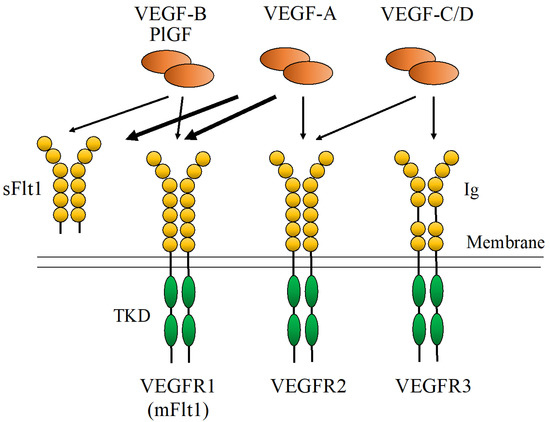
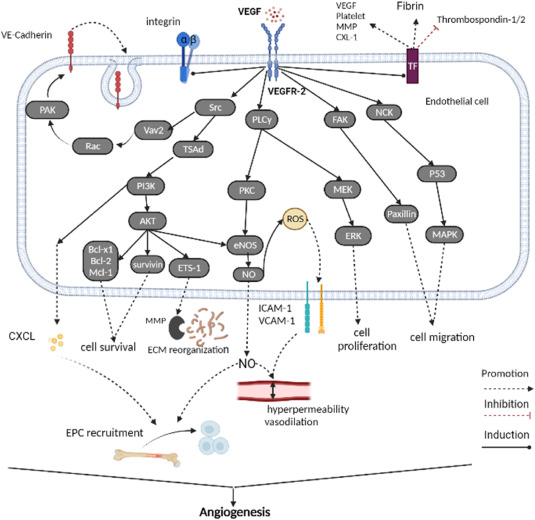
Figure 2 Angiogenesis in cancer endothelial cells mediated by the VEGF‑A/VEGF receptor 2 signaling pathway[2]
Current clinical anti-VEGF therapy is represented by bevacizumab (Avastin), the first approved fully humanized anti-VEGF monoclonal antibody widely used for colorectal cancer, lung cancer, and ocular diseases. However, conventional antibodies suffer from limitations including large molecular weight (~150 kDa), poor tissue penetration, high production costs, frequent intravitreal injections, and low patient compliance, failing to meet long-term therapeutic needs. Therefore, developing smaller, more potent, safer, and more affordable next-generation anti-VEGF agents has become an urgent demand in biomedicine.
Core Technology: Computation-Driven Rational Affinity Maturation of Nanobodies
Nanobodies (VHHs), the variable domains of camelid heavy-chain-only antibodies, are the smallest naturally occurring intact antigen-binding units, with a molecular weight of only 11–15 kDa. They possess unparalleled advantages over conventional antibodies: high structural stability, tolerance to heat and chemicals, efficient prokaryotic expression, exceptional tissue penetration, and the ability to recognize cryptic epitopes inaccessible to traditional antibodies. Nevertheless, their intrinsic affinity is generally lower than that of full-length monoclonal antibodies, representing a major bottleneck for clinical translation.
This study established a full-cycle technical platform ofcomputer simulation → molecular engineering → experimental validation to precisely achieve dramatic affinity enhancement of humanized nanobodies:
- Structure prediction and molecular dockingHomology modeling of the wild-type humanized ant-VEGF nanobody (WHNb) was performed using AlphaFold2 and ColabFold. Protein–protein docking was carried out with ClusPro using VEGFA (PDB: 2VPF) as the target, identifying the binding interface and key hotspot residues (R99, R114, Y115).
- Rational site-directed mutagenesisUsing OSPREY and Nanome software, electrostatic interaction-enhancing mutations were introduced in non-hotspot regions to generate 12 mutants. Binding affinities were predicted with PRODIGY to select high-potential candidates.
- 100 ns molecular dynamics simulationsComplex dynamics simulations were performed with GROMACS. Structural stability was evaluated using RMSD, Rg, SASA, hydrogen bonding, and other metrics to ensure mutations did not disrupt global folding.
- Binding free energy calculation via umbrella samplingBinding free energy ΔG was calculated from PMF profiles to quantitatively compare binding strength between mutants and VEGF, ultimately identifying MHNb136 and MHNb256 as the optimal variants.
- Prokaryotic expression, purification, and SPR affinity validationSoluble high-level expression of mutants was achieved inEscherichia coli. After Ni-column affinity purification, affinity was quantified using a Biacore SPR system, and safety was assessed in human retinal pigment epithelial (RPE) cells.
This computation-guided experimental platform drastically shortens development cycles and reduces costs, providing a replicable standardized protocol for rational engineering of nanobodies.
Key Results: Affinity Superior to Bevacizumab
Significantly improved binding free energy
- Wild-type WHNb: ΔG = −19.05 kcal/mol
- MHNb256: ΔG = −39.30 kcal/mol
- MHNb136: ΔG = −32.64 kcal/mol
Binding strength of mutants increased 1.7–2.1-fold compared with the wild type, enabling tighter and more stable binding.
SPR-measured affinity outperforms clinical gold standard
Against bevacizumab (A) withKD = 7.49 nM:
- MHNb136 (C):KD = 1.09 nM, 6.87-fold affinity improvement
- MHNb256 (D):KD = 1.74 nM, 4.30-fold affinity improvement
- Wild-type WHNb (B): 2.83-fold affinity improvement over bevacizumab
Excellent in vitro safety
MTT assays and cell morphological observations confirmed that MHNb136 and MHNb256 exerted no cytotoxicity, apoptosis induction, or abnormal proliferation in human RPE cells across the full concentration range (12.5, 25, 50, 100 μg/mL), ensuring sufficient safety for ophthalmic applications.
Optimized interaction mechanism
Mutants strengthened binding via newly formed salt bridges and electrostatic interactions rather than relying on hydrogen bond count, enabling highstrength and highspecificity VEGF recognition and laying a structural foundation for longlasting inhibition.
Core Advantages of Humanized Nanobodies
- Complete humanization reduces immunogenicityHumanization maximizes restoration of human antibody framework sequences, eliminating xenogeneic immune risks and supporting safe repeated long-term administration in humans, ideal for chronic treatment of ocular diseases and cancer.
- Ultra-small size enables superior tissue penetrationAt 11–15 kDa, nanobodies rapidly cross the retinal barrier and dense tumor stroma, reaching lesions inaccessible to conventional antibodies and achieving more uniform and deeper target coverage.
- Economical production lowers therapeutic costsHigh-level expression can be rapidly achieved inE. coli without expensive mammalian cell systems, reducing production costs by an order of magnitude and improving accessibility of high-end targeted drugs.
- High stability supports diverse delivery routesResistance to pH and temperature extremes enables development of ophthalmic formulations, lyophilized preparations, topical delivery, and other versatile dosage forms, enhancing clinical convenience.
- Rational engineering overcomes intrinsic affinity limitationsThis study demonstrates that computation-assisted affinity maturation can upgrade nanobodies from potential molecules to potent candidates surpassing clinical first-line drugs, breaking a key barrier from basic research to clinical translation.
Conclusion
This study targets VEGF and uses computation-driven rational affinity maturation to successfully develop the humanized anti-VEGF nanobody MHNb136, whose affinity is nearly 7-fold higher than bevacizumab with excellent in vitro safety. These results validate the comprehensive superiority of humanized nanobodies in molecular size, manufacturing, tissue penetration, and immunological safety, and prove that rational engineering can fully resolve the industry challenge of insufficient nanobody affinity. As next-generation antibody drugs, humanized nanobodies will reshape the landscape of anti-angiogenic therapy for ocular diseases and cancer, delivering truly accessible innovative therapies to patients worldwide with higher efficacy, lower costs, and better compliance.
NBLST is a nanobody industry platform initiated and established by Wuhan Industrial Innovation and Development Institute. It owns an independent laboratory covering 1,400 square meters at the Precision Medicine Industrial Base of Wuhan National Bioindustry Base. Meanwhile, it has set up an alpaca experimental base and a transit base compliant with laboratory animal standards in Zuoling, Wuhan and Tuanfeng, Huanggang respectively. At present, the bases house more than 200 alpacas in total, and can provide alpaca immunization services with "zero immune background" guarantee for research institutions and antibody drug R&D enterprises.
NBLST focuses on the research, development, engineering and application of nanobodies, and is committed to building an integrated industry-university-research public experimental service platform. The company has established a full-chain technology platform covering antigen preparation (polypeptides, proteins and RNA), antibody discovery and engineering modification, as well as biological function validation and screening. Among these, its RNA antigens include sequence- and structure-optimized RNA products suitable for alpaca immunization.Based on the proprietary NabLib® platform, the company employs the improved pDual bifunctional phage display technology. While retaining the high-efficiency development advantages of traditional phage display, this technology enables seamless connection with high-level expression in mammalian cells, significantly improving the efficiency of eliminating problematic molecules. Its NabLib® mammalian cell display technology not only enhances the developability of antibody molecules, but also allows flexible selection of screening formats, providing reliable support for downstream antibody applications and detection.Through the synergistic complementation of multiple platforms, the company provides flexible and efficient antibody discovery and engineering services for pharmaceutical companies and research institutions, supporting the development of innovative drugs and diagnostic reagents.
Contact Us:
Tel: 400-822-9180
Email: marketingdept@nanobodylife.com